All About the Money Dance Tradition
Have you attended a wedding reception that included the money dance? Did you wonder why guests were showering money or pinning bills on the couple and lining up to dance with them?
What Is the Money Dance?
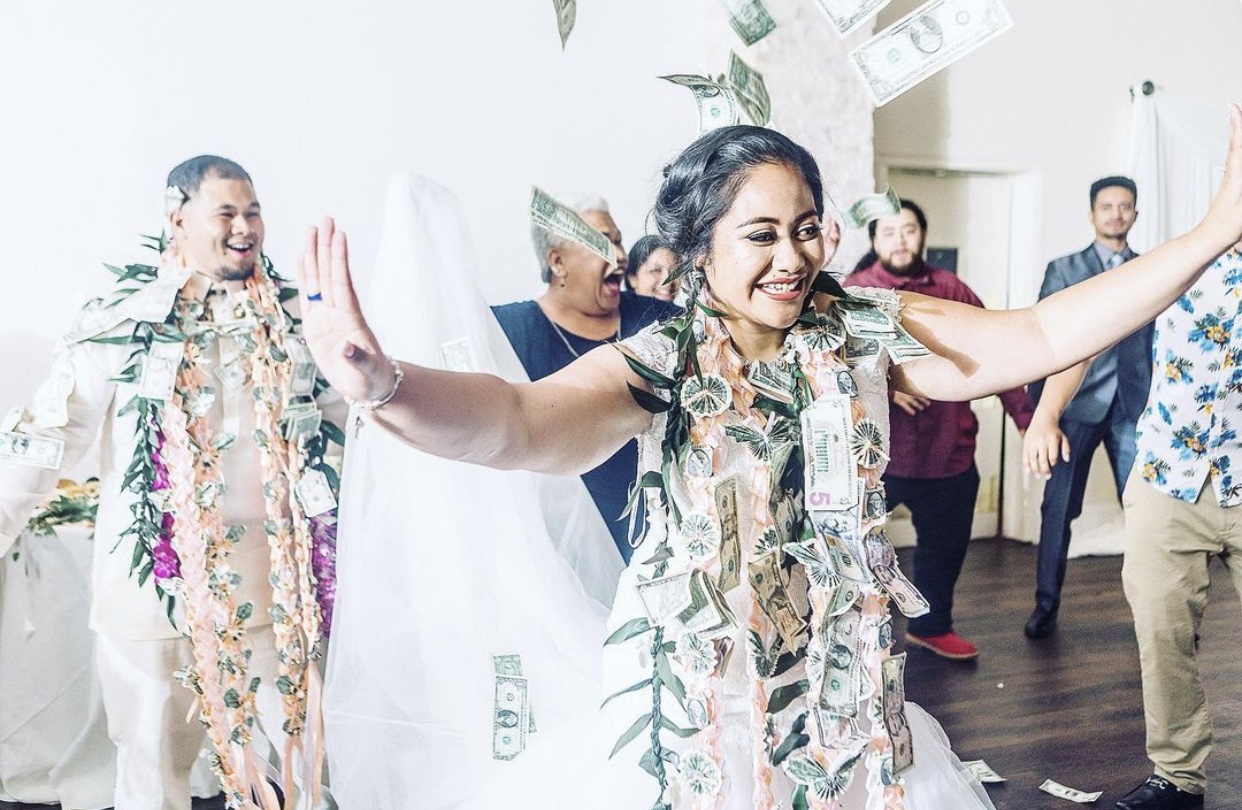
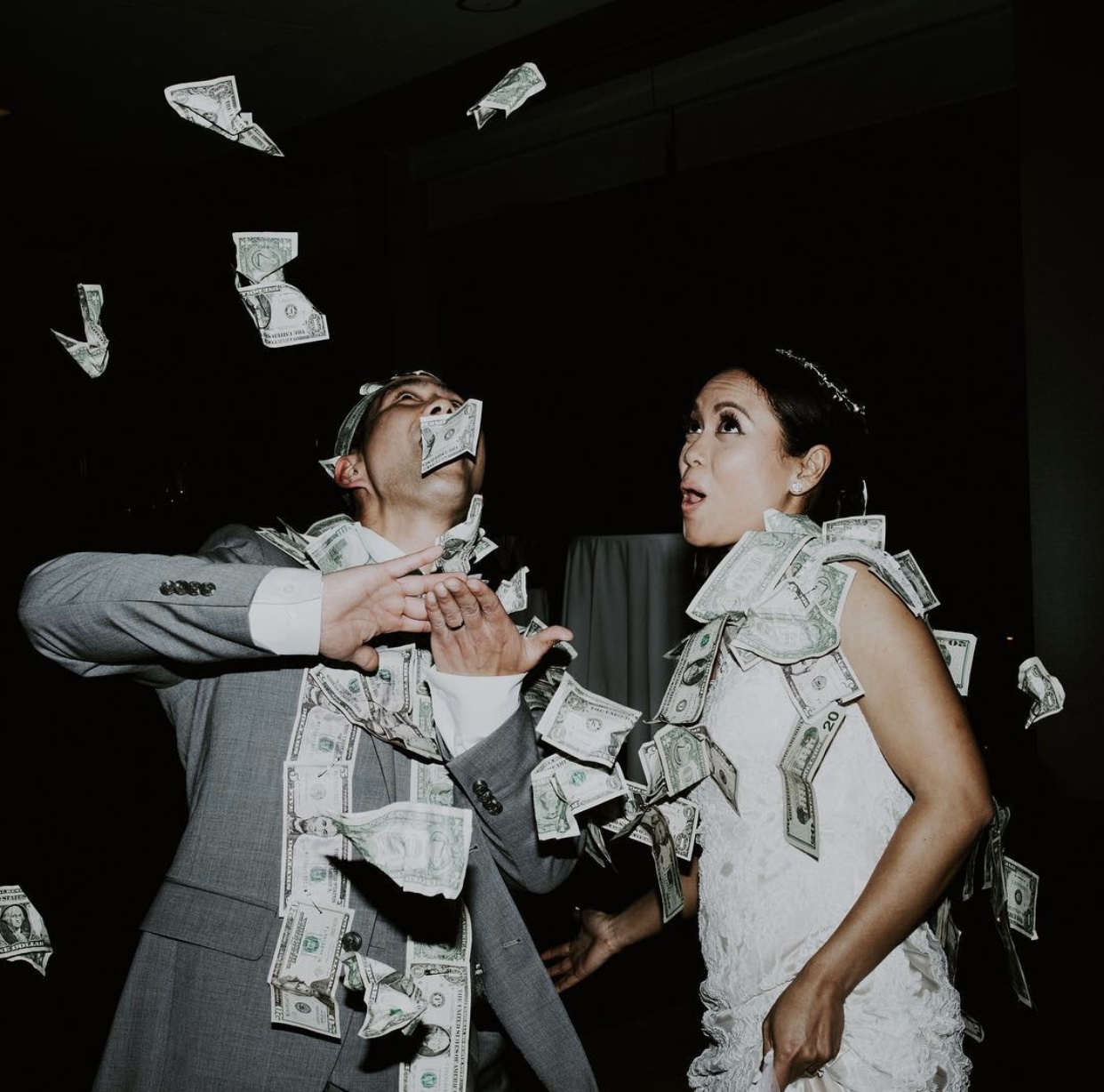
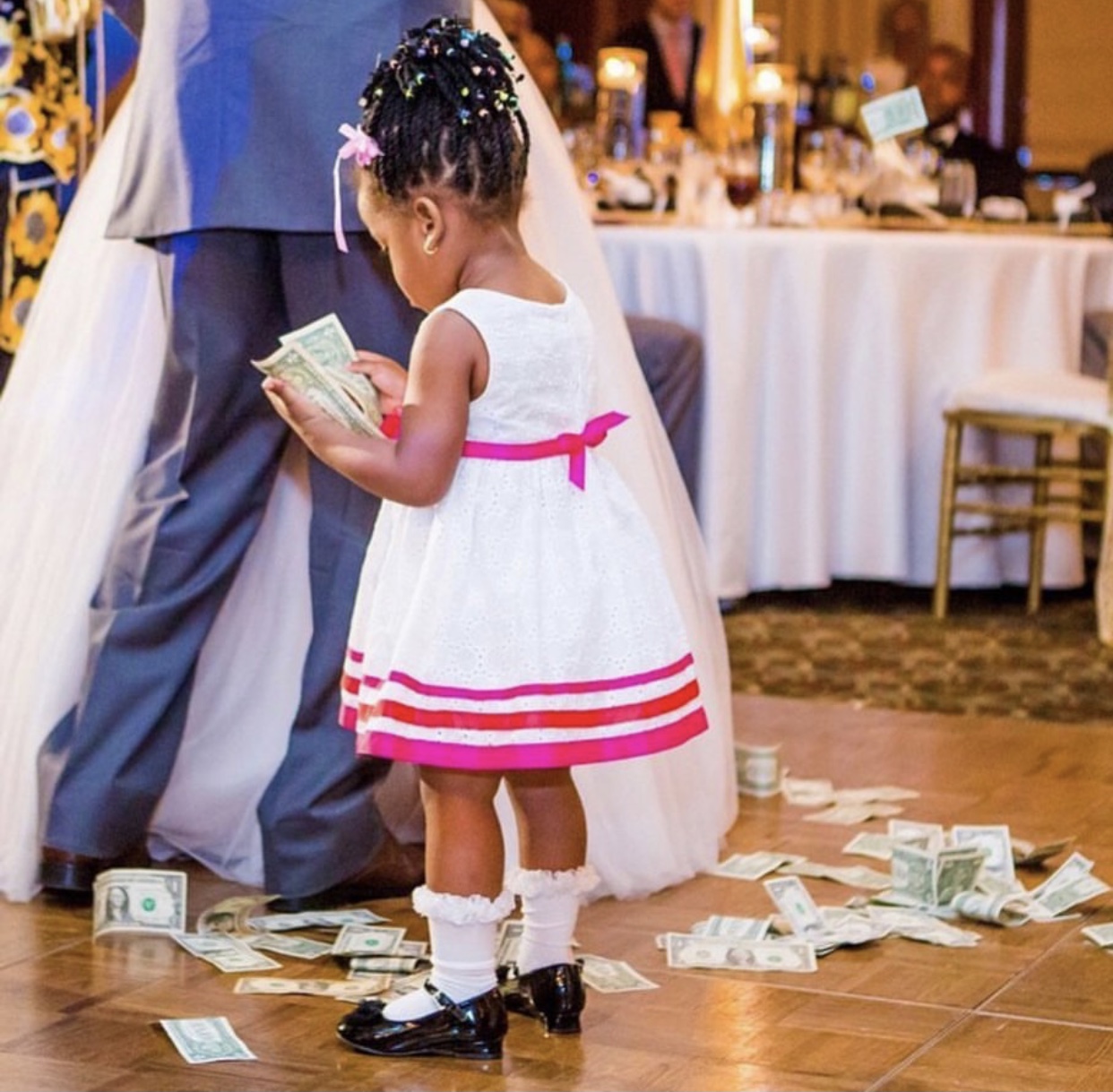
The money dance is a cultural tradition at many wedding receptions. This is where guests offer the newlyweds money to dance with them, or they shower the couple with money. The custom is to help establish the couple in their new life together. Or to show how much they are loved and appreciated.
For a couple whose heritage includes the money dance, it still may be a difficult decision to include it or not. They worry that guests may see it as an overt ask for money. Communicate that it’s a cultural celebration. And an excellent way for guests to interact with the bride and groom. Then include the dance in your reception timeline. Even if both of you don’t share the same traditions, it can be a memorable way to unite the two families.
Couples put a lot of consideration into incorporating cultural traditions like the money dance into their special day. Because their guests may be unfamiliar, we always recommend including these traditions on the FAQ page of your wedding website. This helps to inform them ahead of time as to the traditions.
The History and Meaning of the Money Dance
The money dance, which is also called the dollar dance, money spray, or apron dance is celebrated through several different cultures. Performing this custom that varies across the cultures which practice it. There is no definitive source to reference as to when it started. Or which country or culture was first to initiate it as part of a wedding celebration. However, variations of it are popular in Poland, Greece, Nigeria, Philippines, Samoa, Fiji, Tonga, Portugal, Cuba, Latin America, Mexico, Eastern Europe, and other cultures. Naturally, immigrants brought their customs with them to America. So the dance is part of many wedding celebrations here in the U.S. as well.
We’ve planned the money dances for our Nigerian, Filipino, and Polish clients’ weddings. It’s always the fun part of the night where everyone is cheering, dancing, and celebrating. The difference between the money dances is the way each culture offers the money and the reasoning behind the method.
Depending on the culture, as a guest, you may participate for as little as a dollar. Many guests will bring large bills and have them broken into smaller ones as part of the “show.” The average money spray spend is $30. It can be upwards of $100, however. And is most often in the local currency of the country in which the couple resides.
The Money Dance in Different Cultures
Polish Apron Dance
All of the guests line up to dance with the bride. They offer money to the newlywed couple, which is collected into a special apron held by the bride’s father. The Pani Mloda Polka song is played. After dancing with the bride, you receive a drink, usually a shot of vodka.
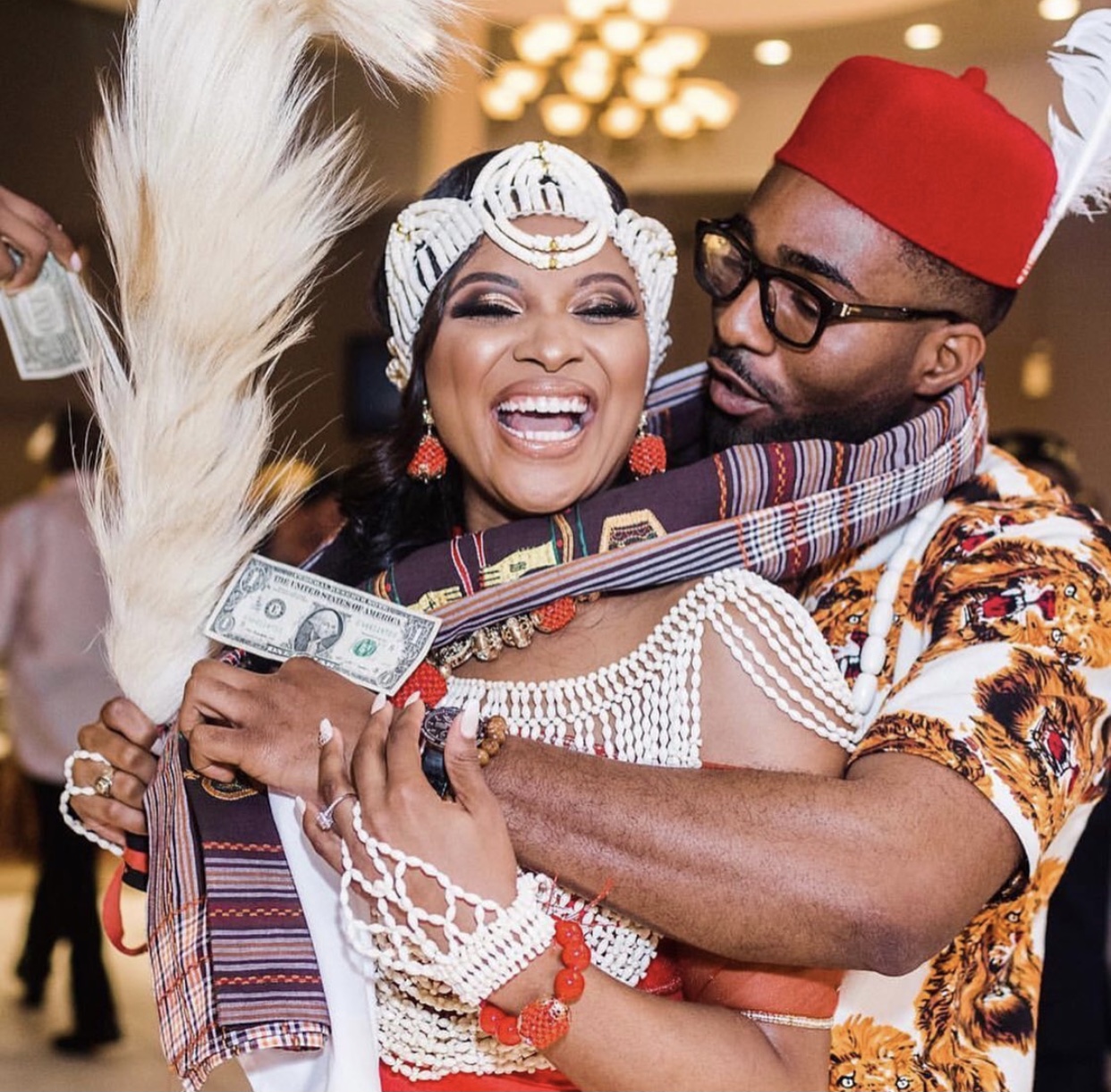
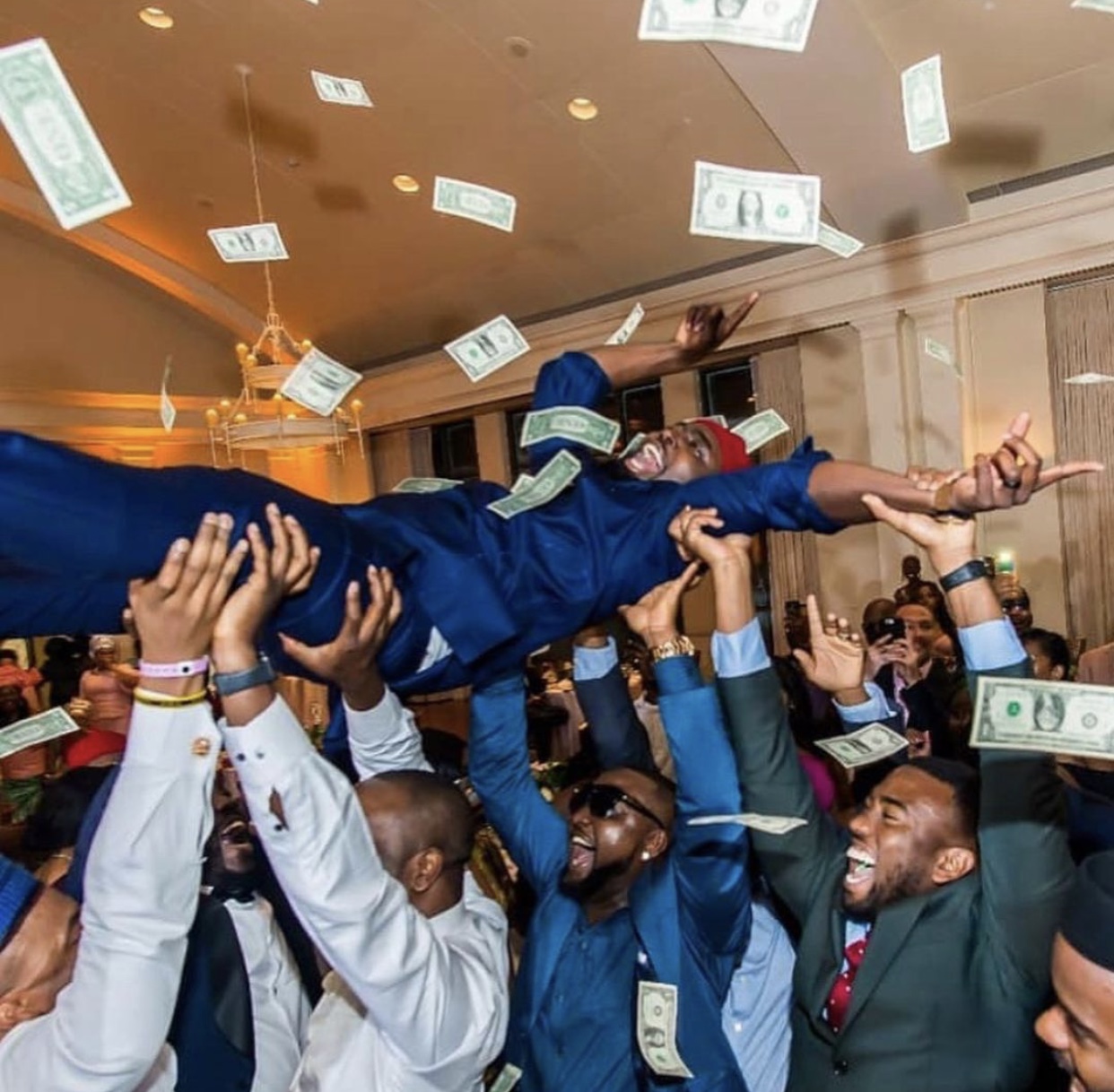
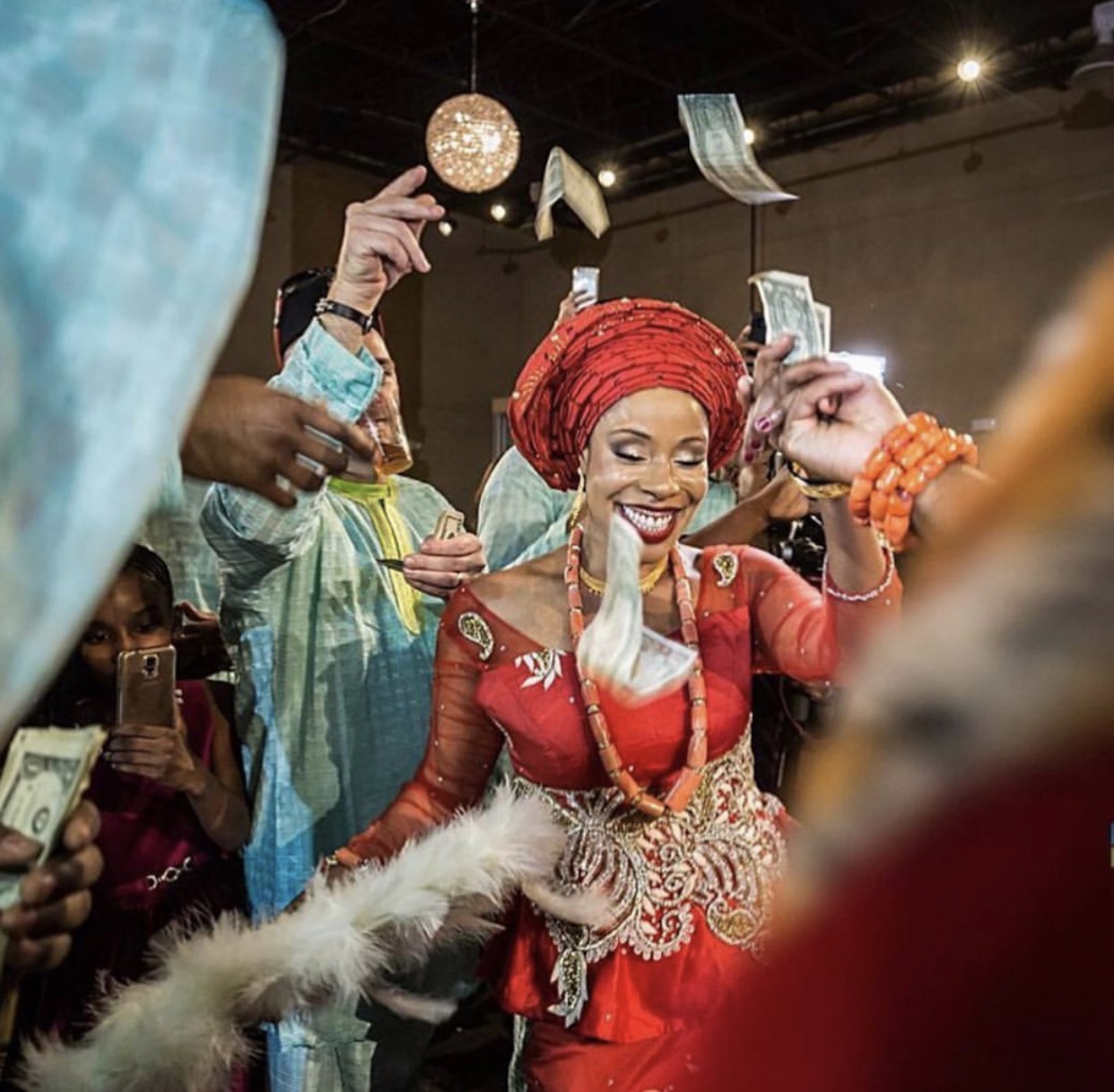
Nigerian Money Spray
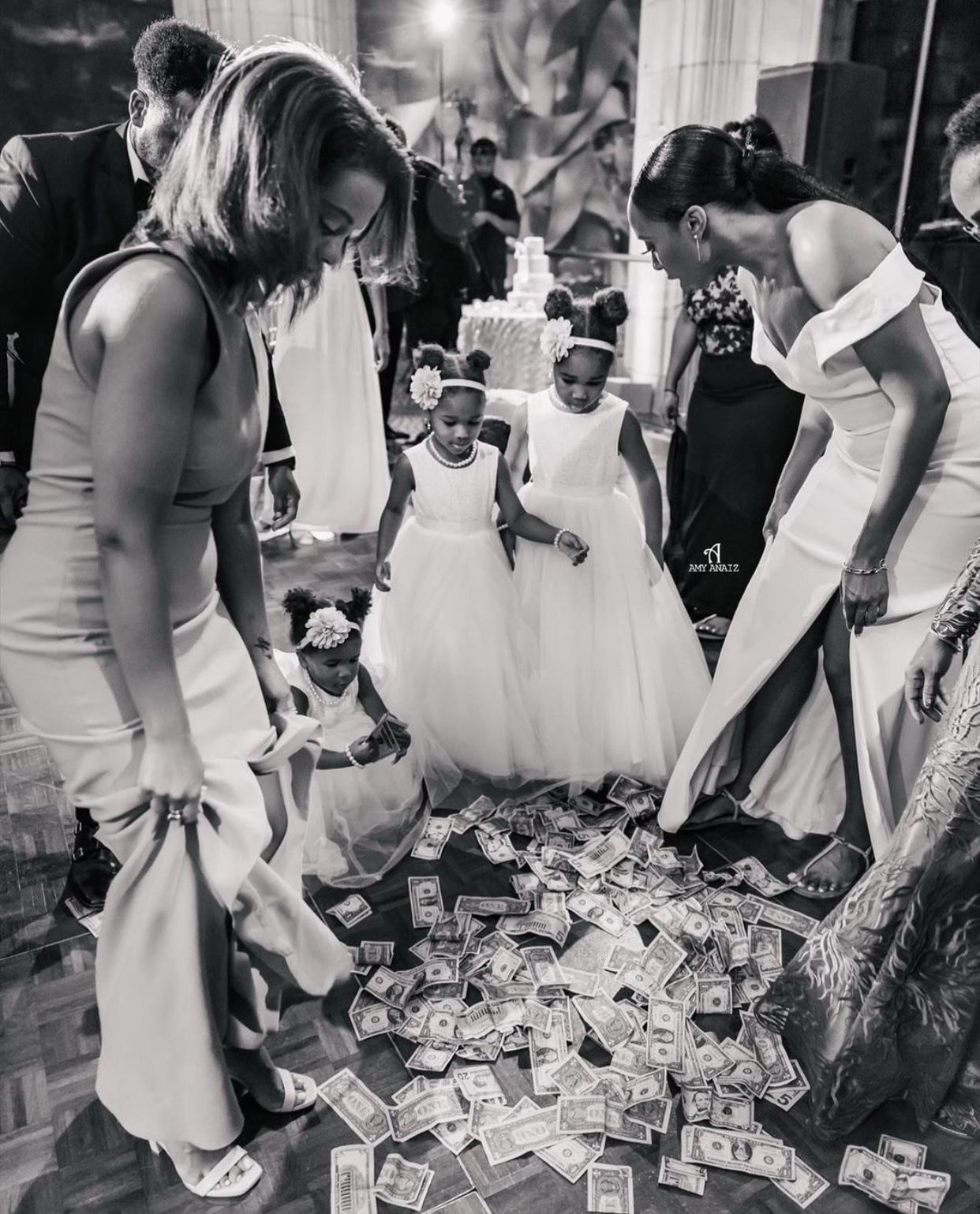
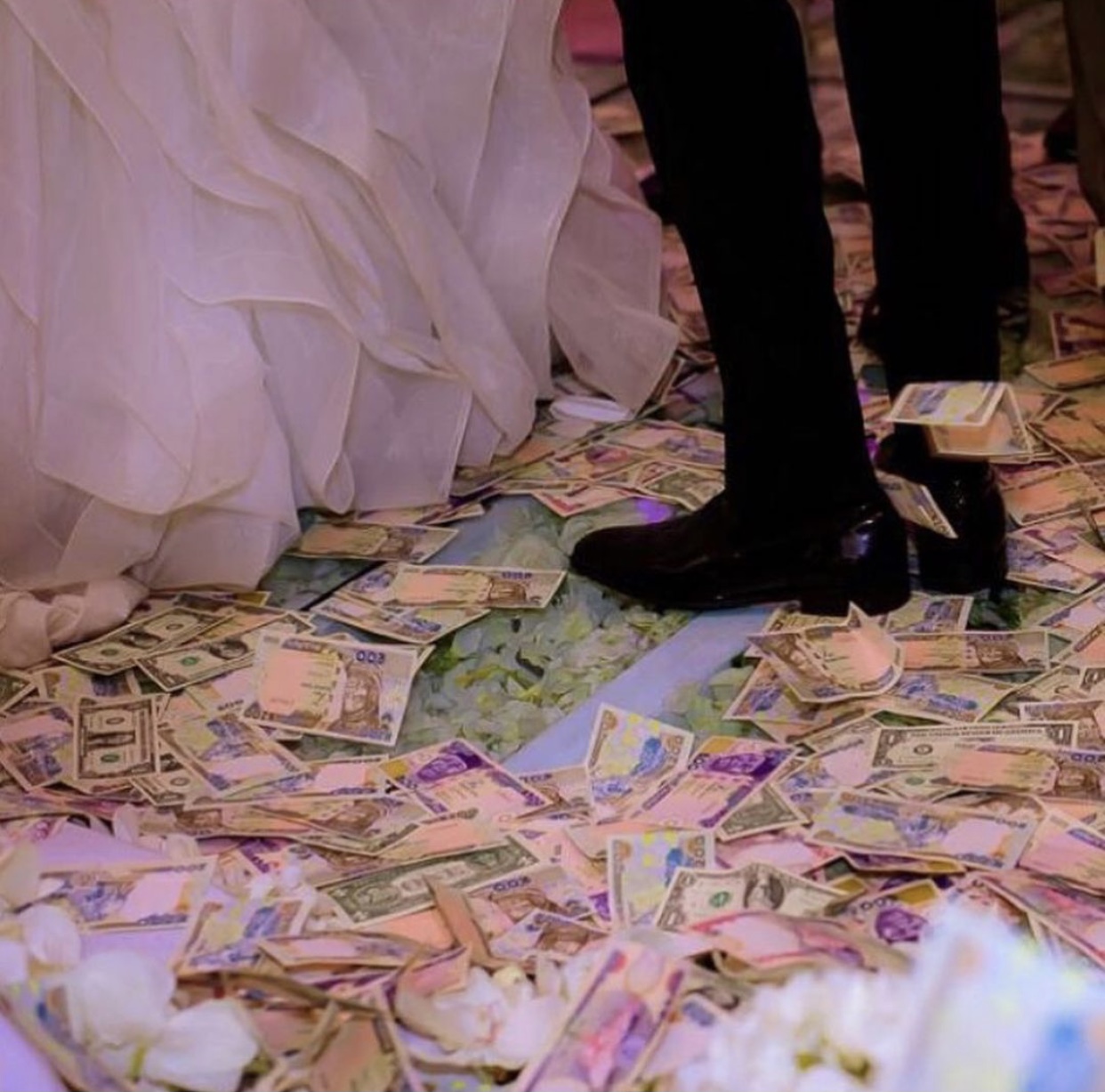
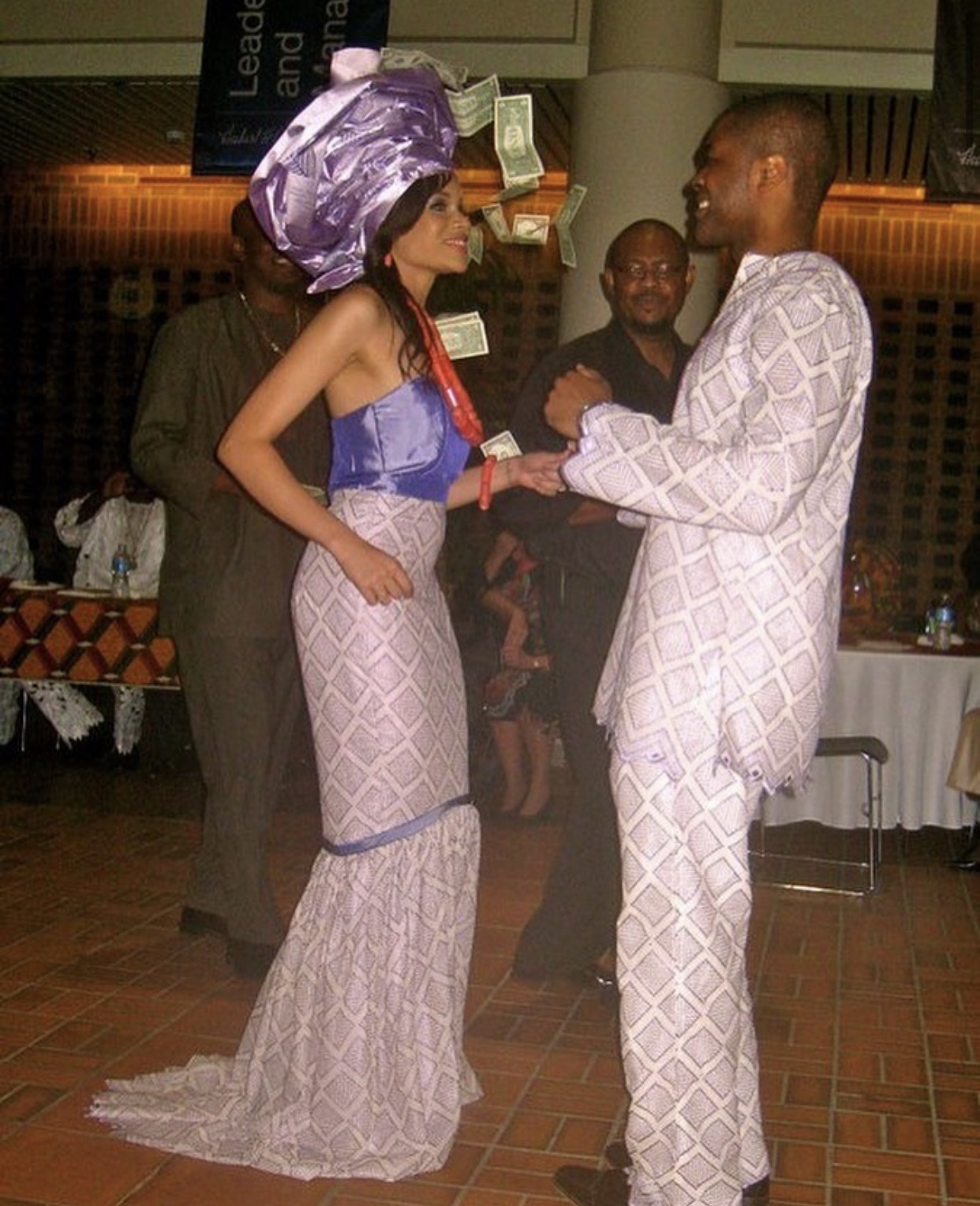
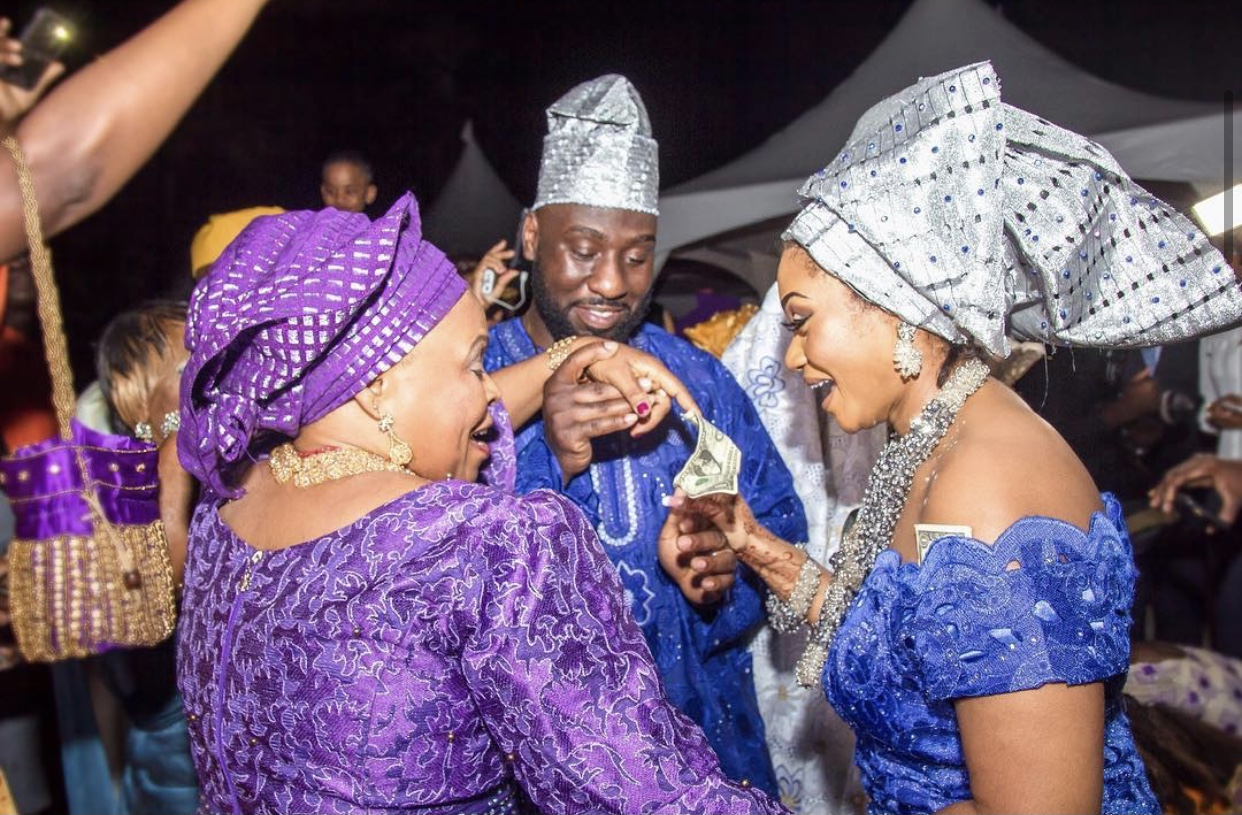
Originated by the Yoruba people in Nigeria’s Southwest, it’s is a tradition loved by many Nigerians. Money Spraying symbolizes a showering of happiness, good fortune, and a display of the guest’s affection for the couple. The bride and groom are ushered in and dance behind the wedding party. Guests encircle the couple on the dance floor. Then come forward, placing bills on the couple’s forehead, allowing them to “rain down.”
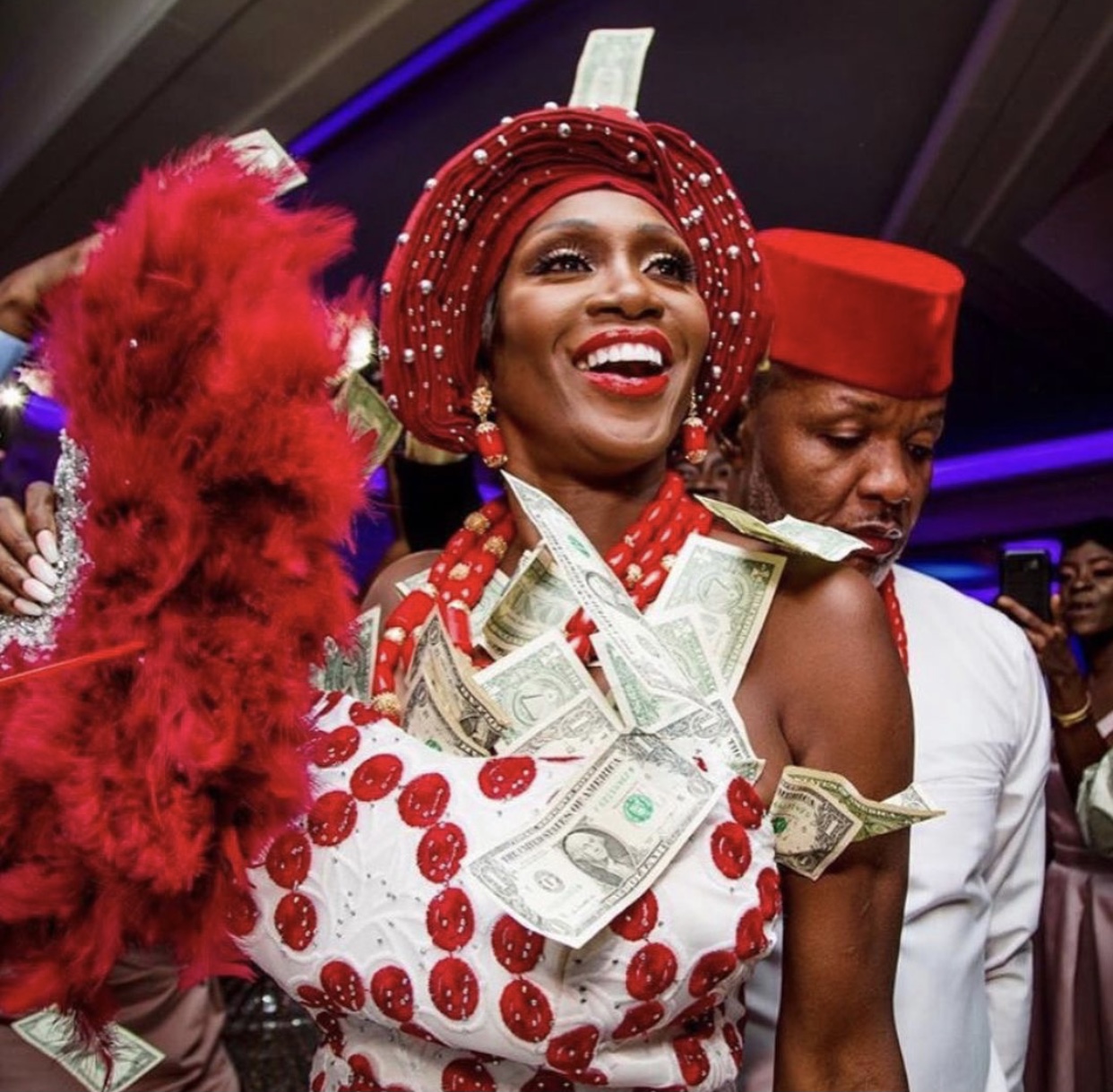
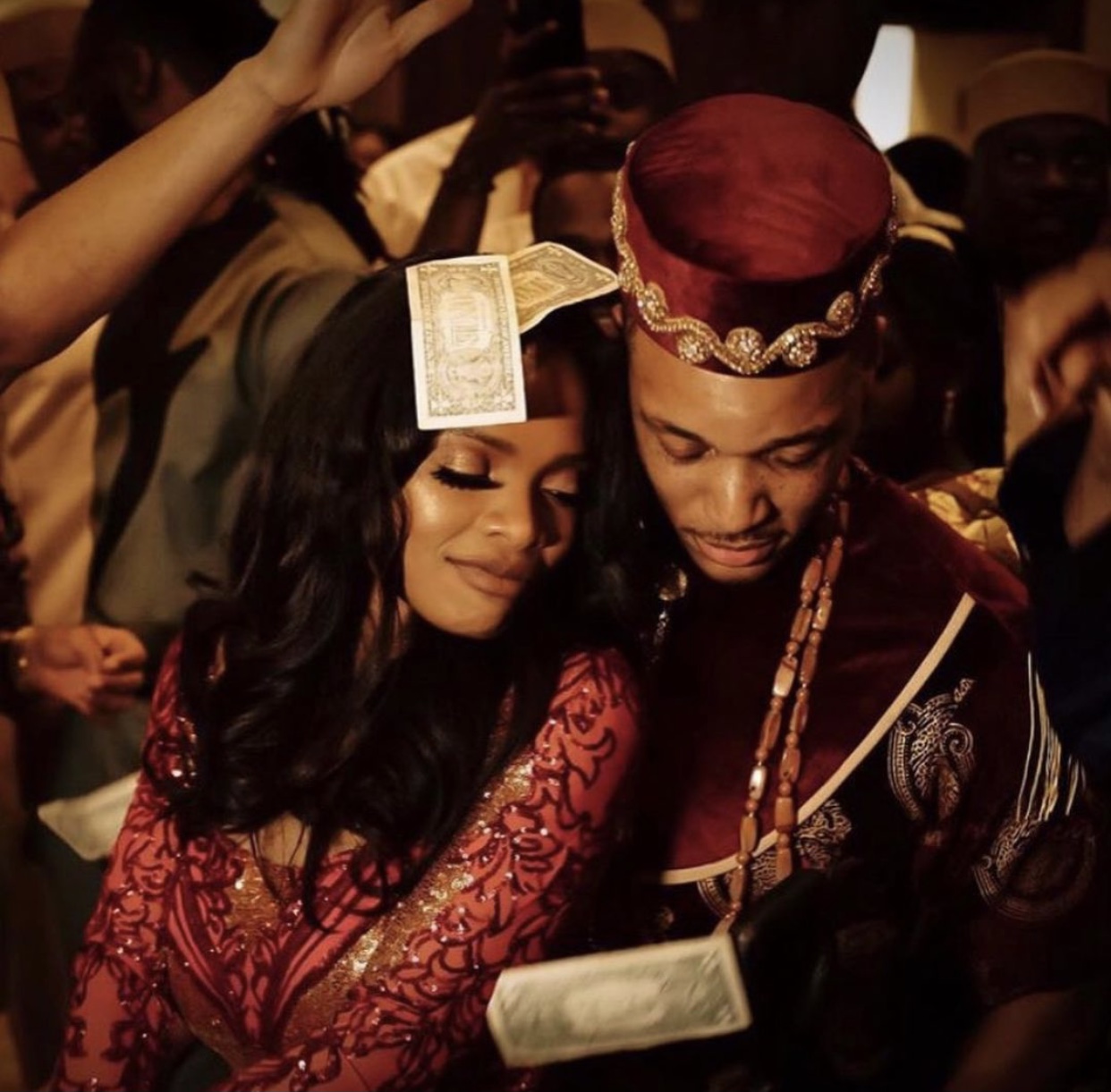
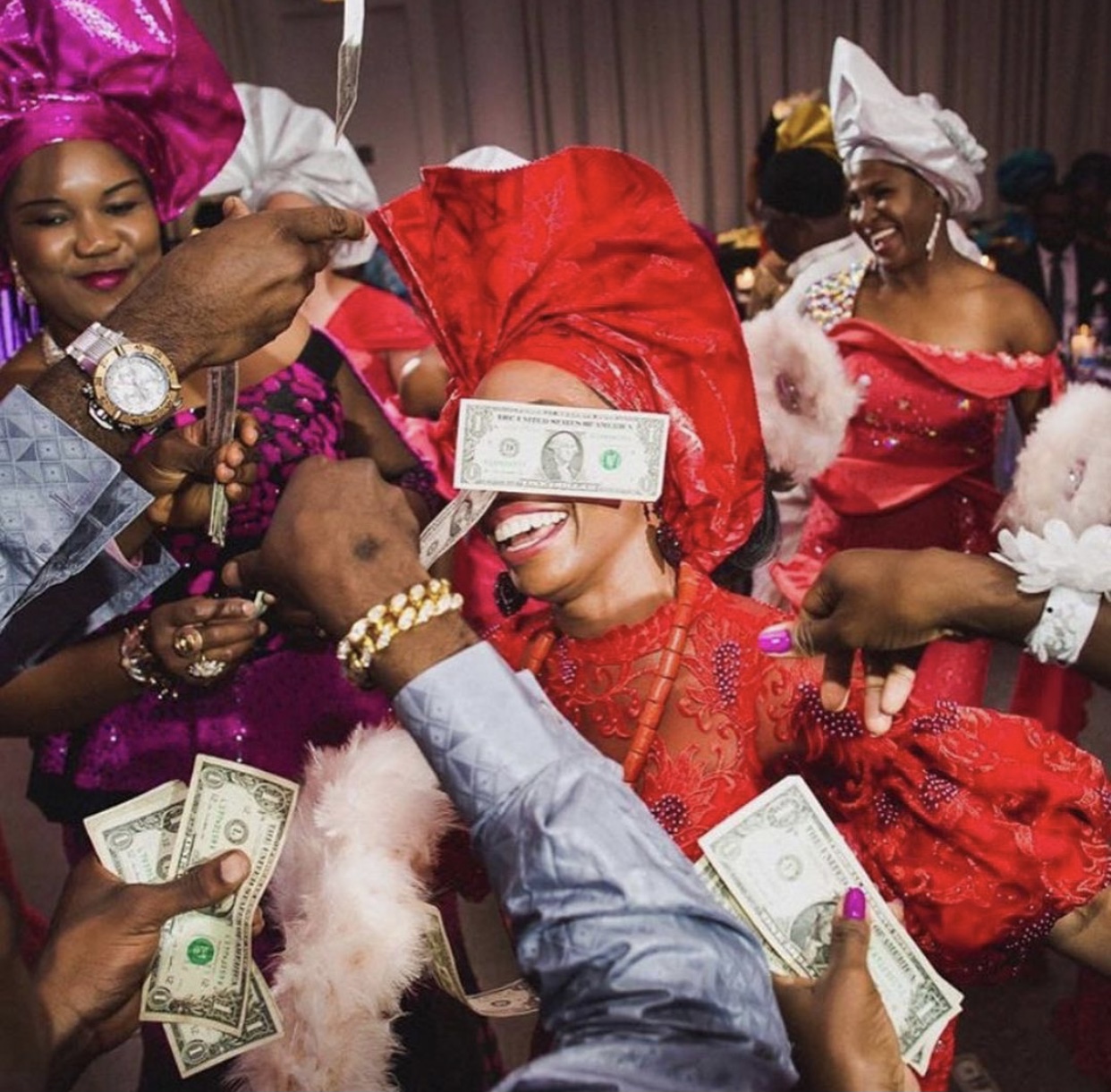
At a Nigerian wedding reception, the bride and groom are dressed in traditional attire. For the Yoruba tribe, the bride wears Iro and Buba and the groom wears an Agbada. As the money is sprayed, ‘collectors’ take the cash from the floor and place in bags for the couple.
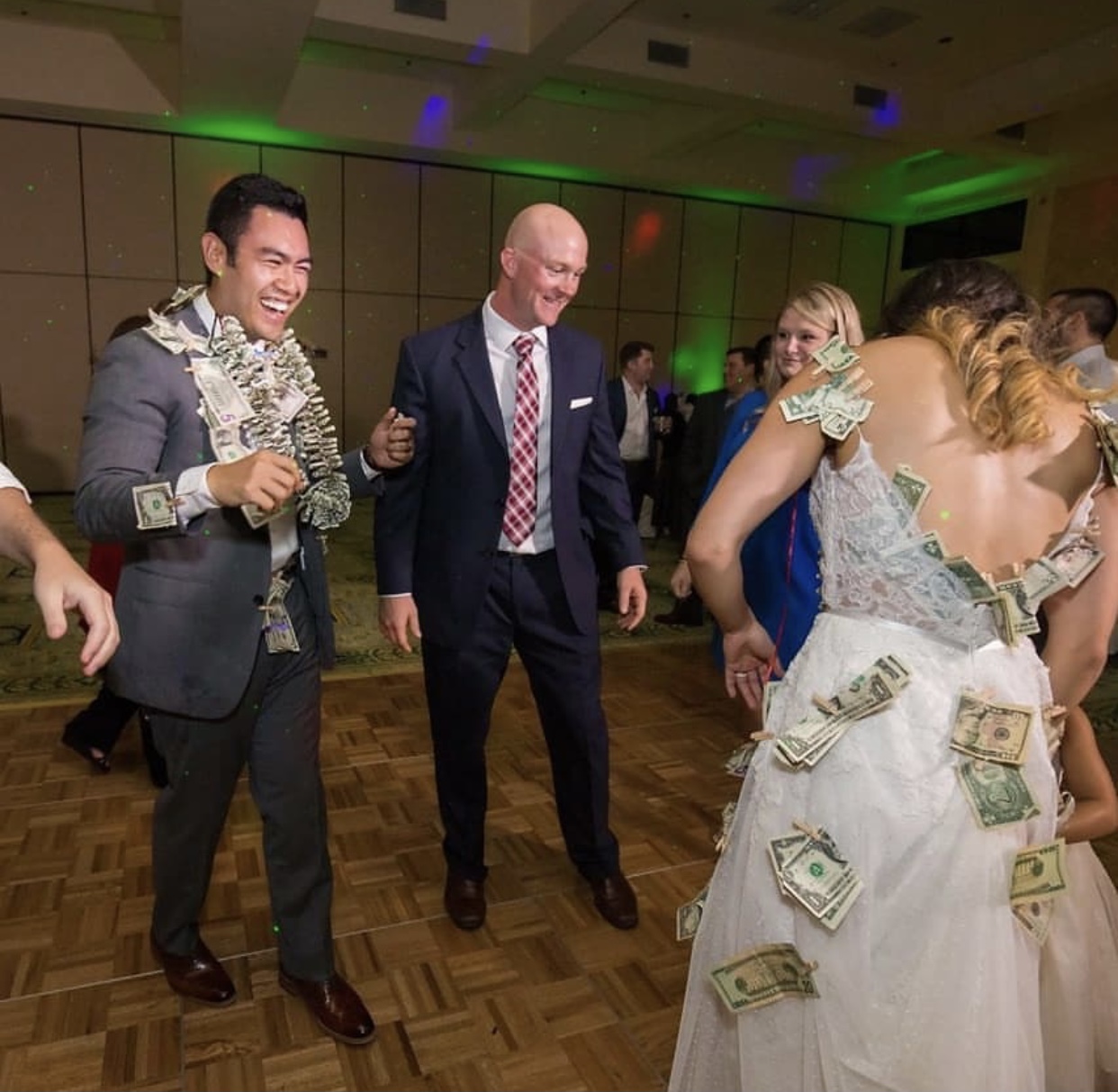
Filipino Money Dance
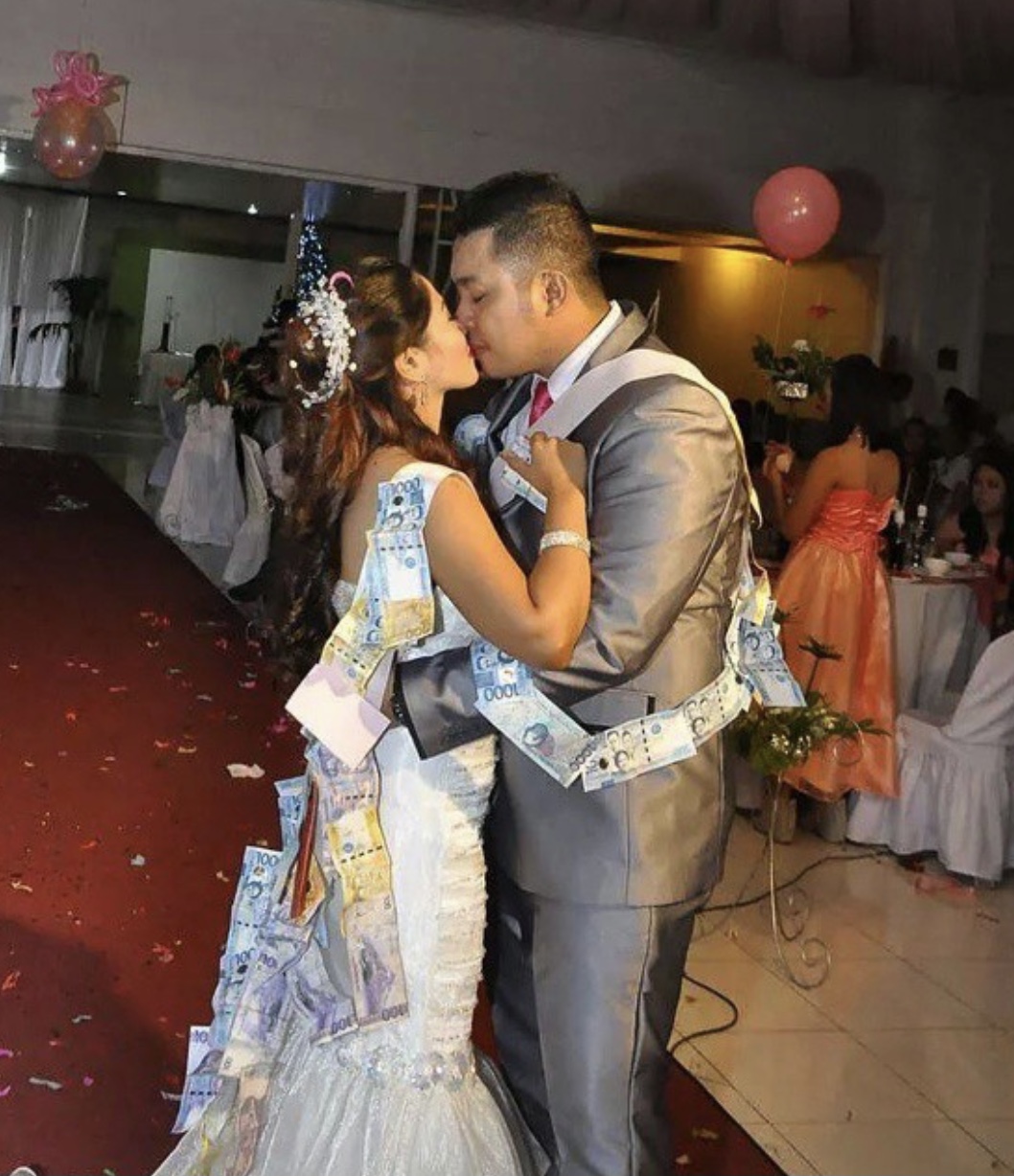
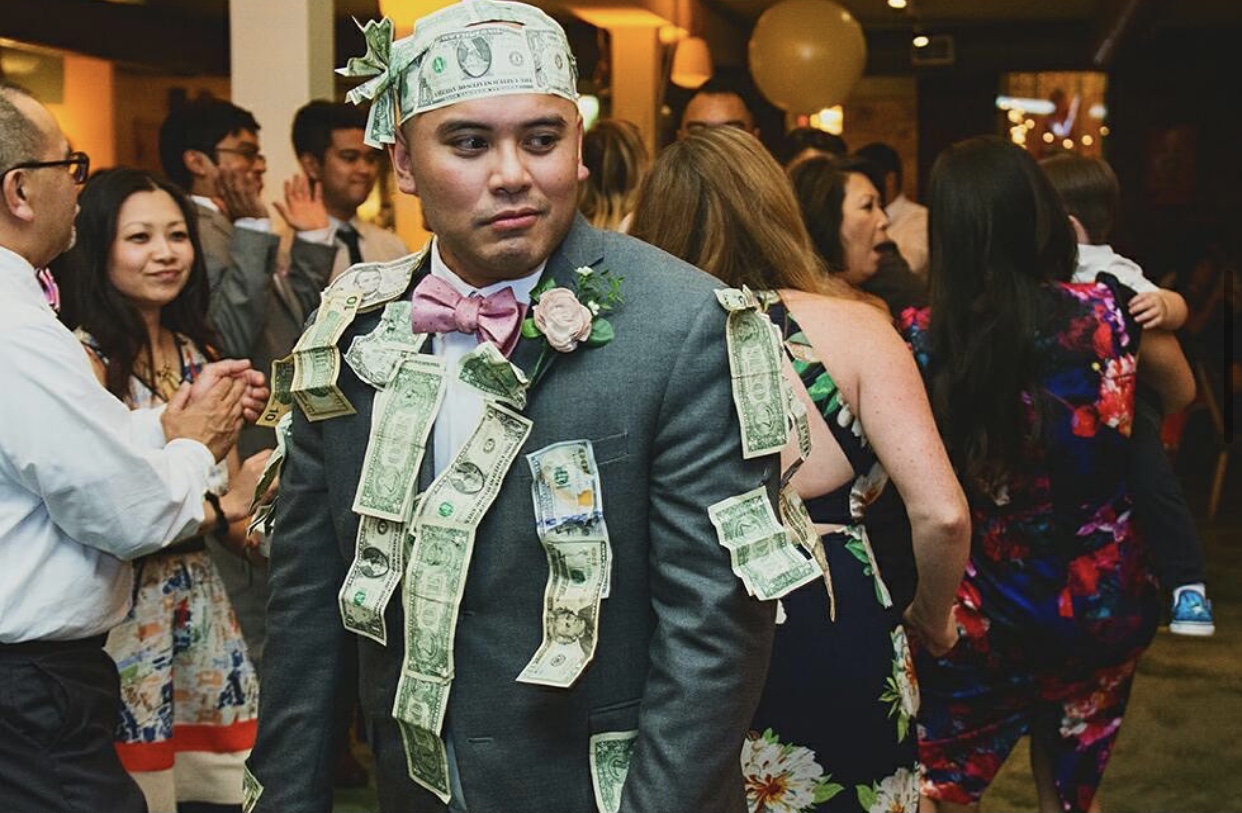
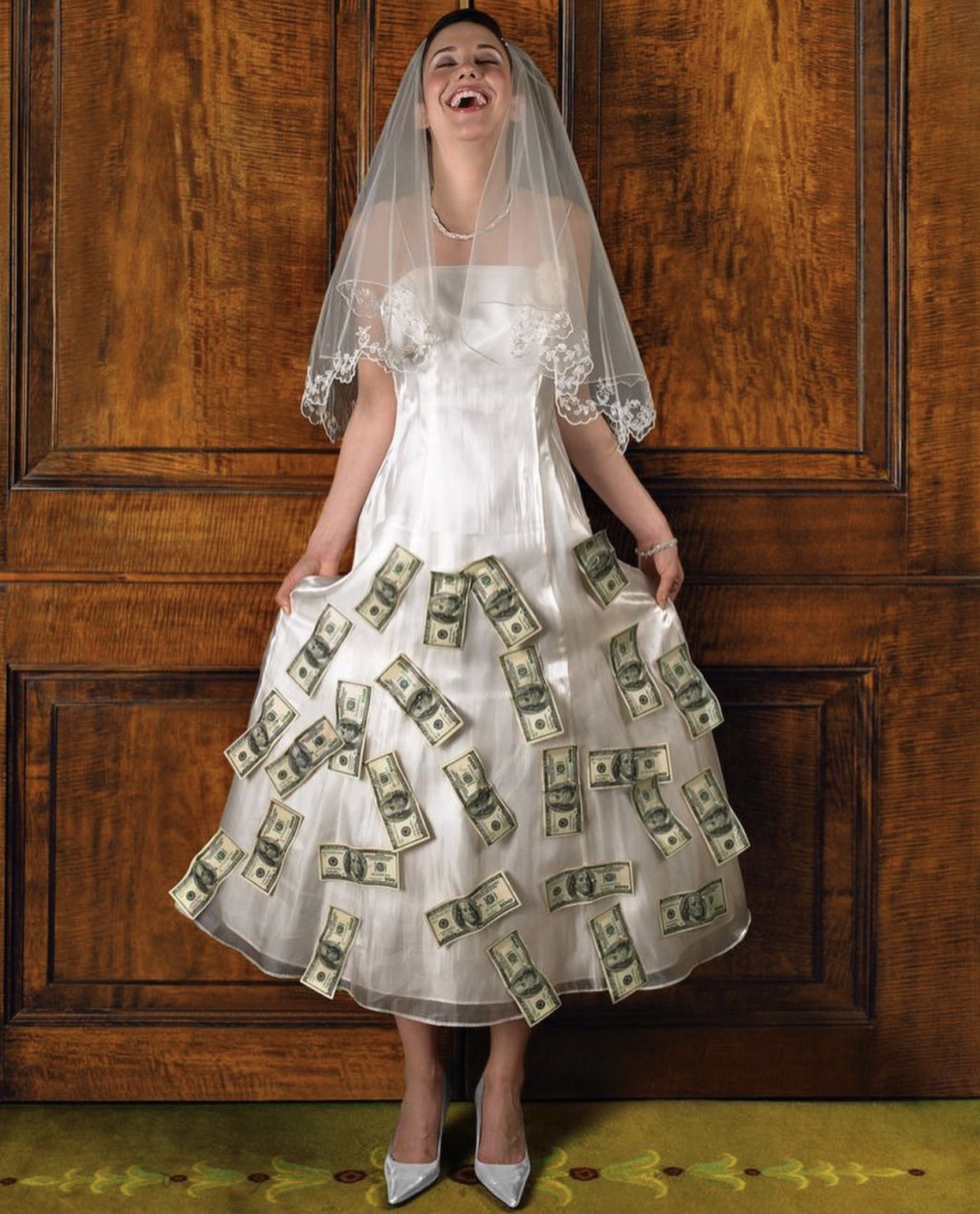
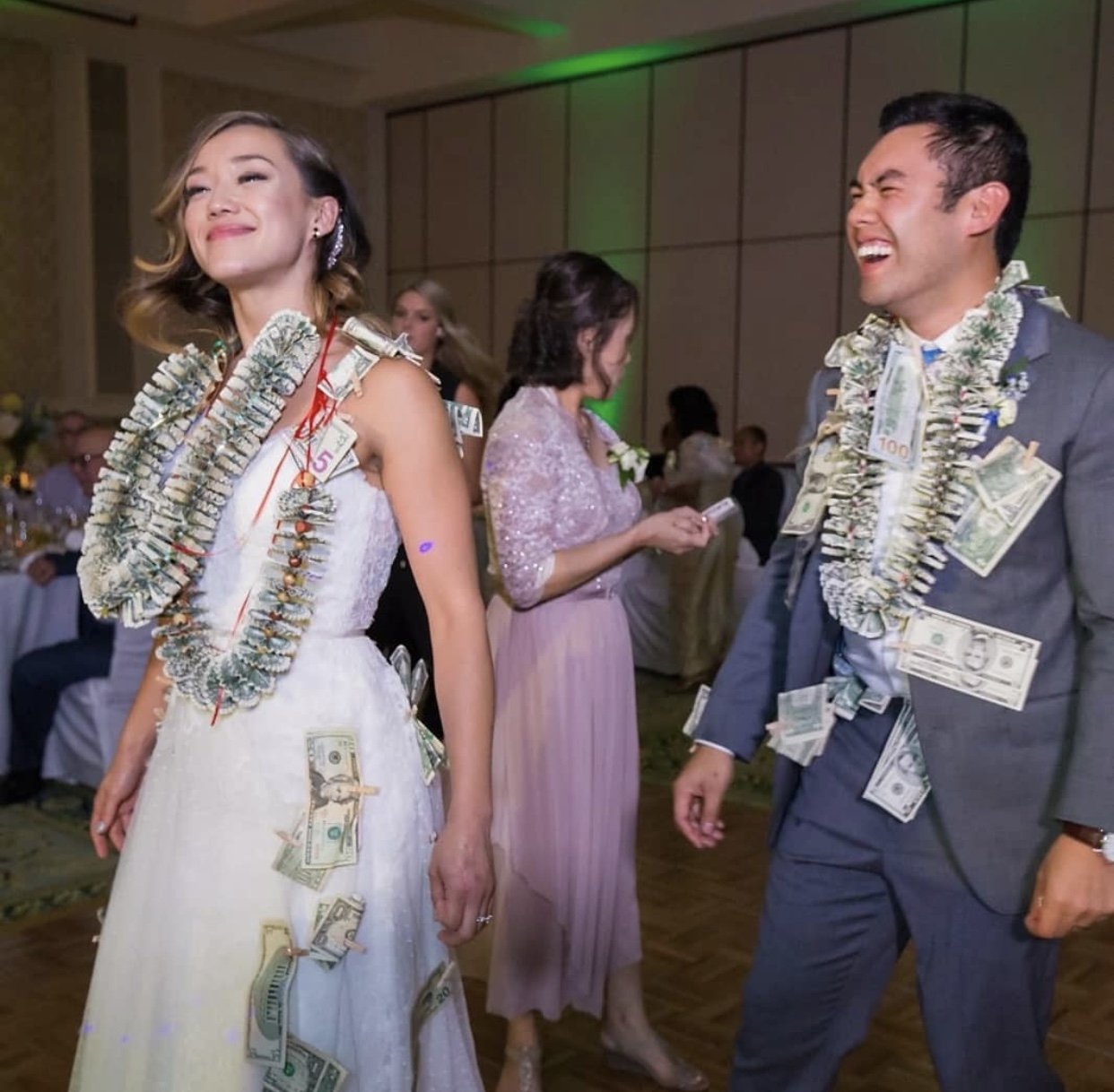
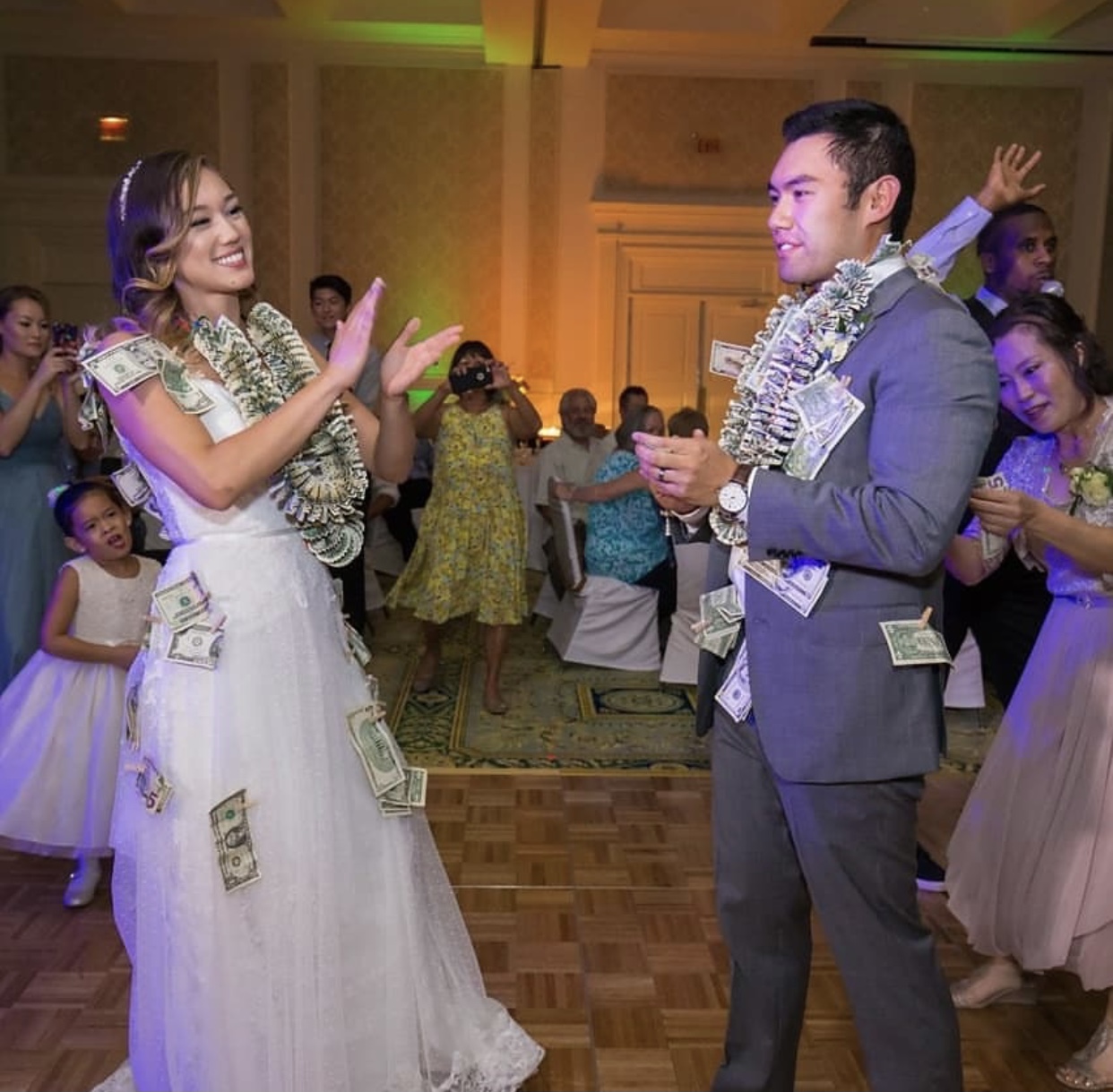
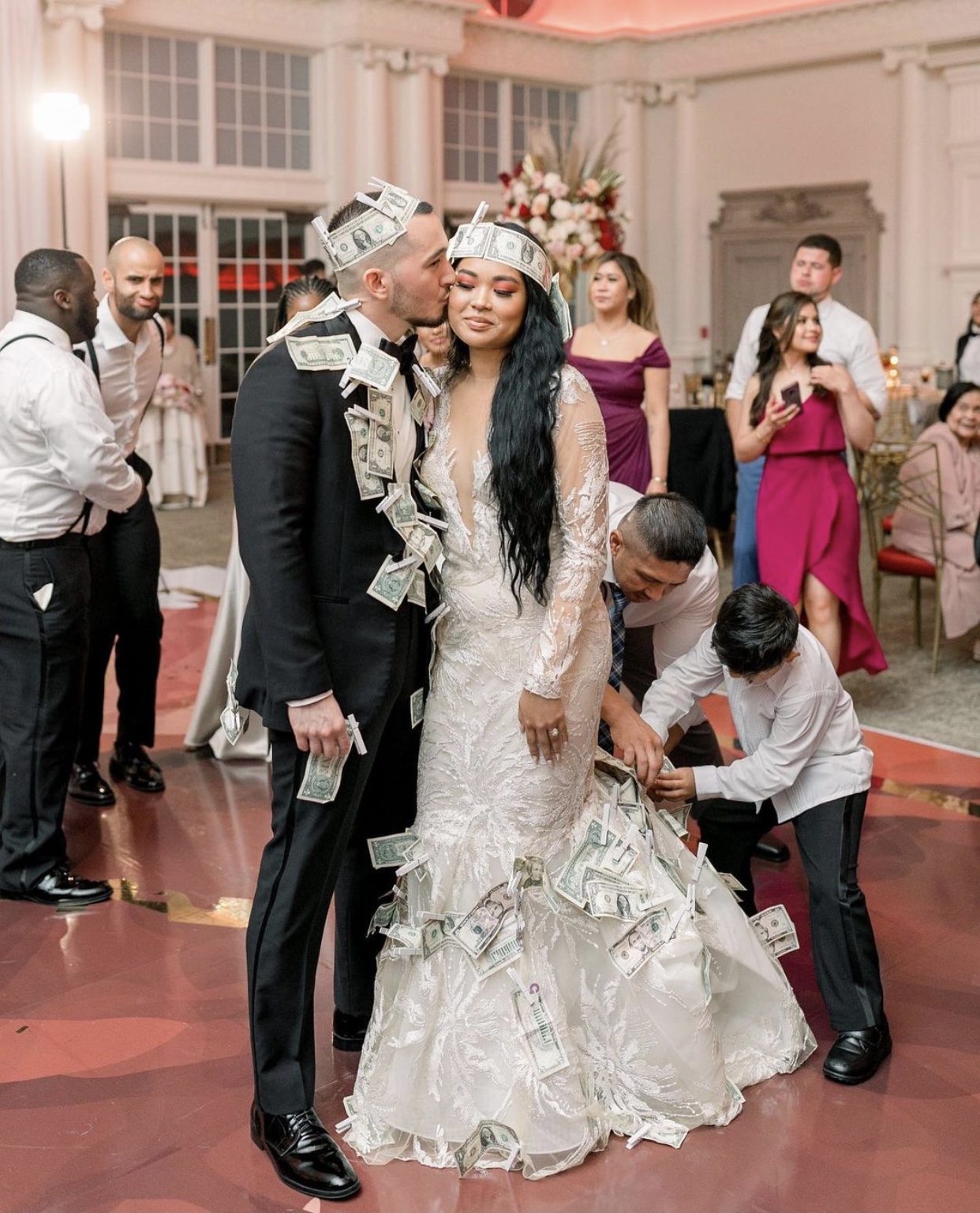
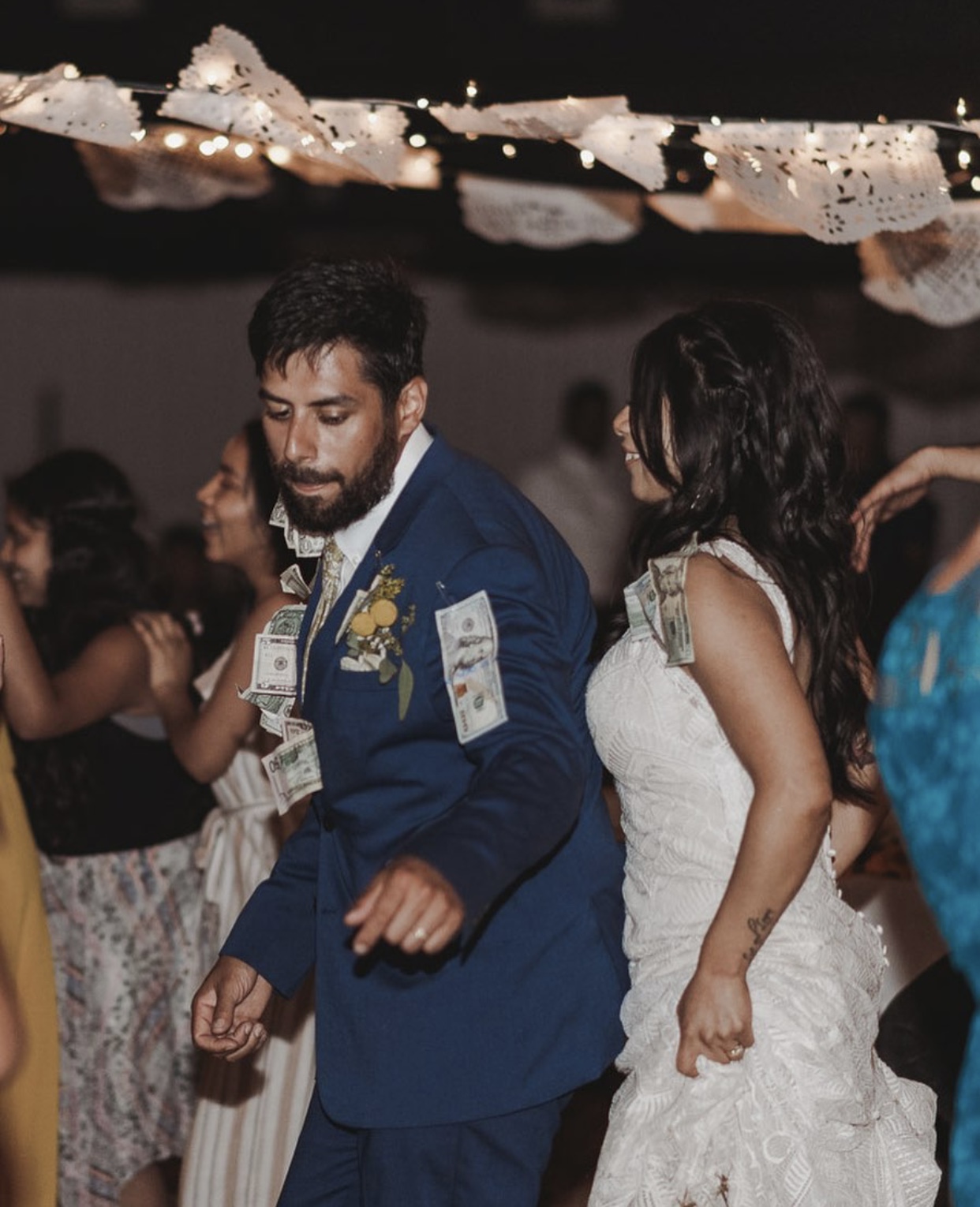
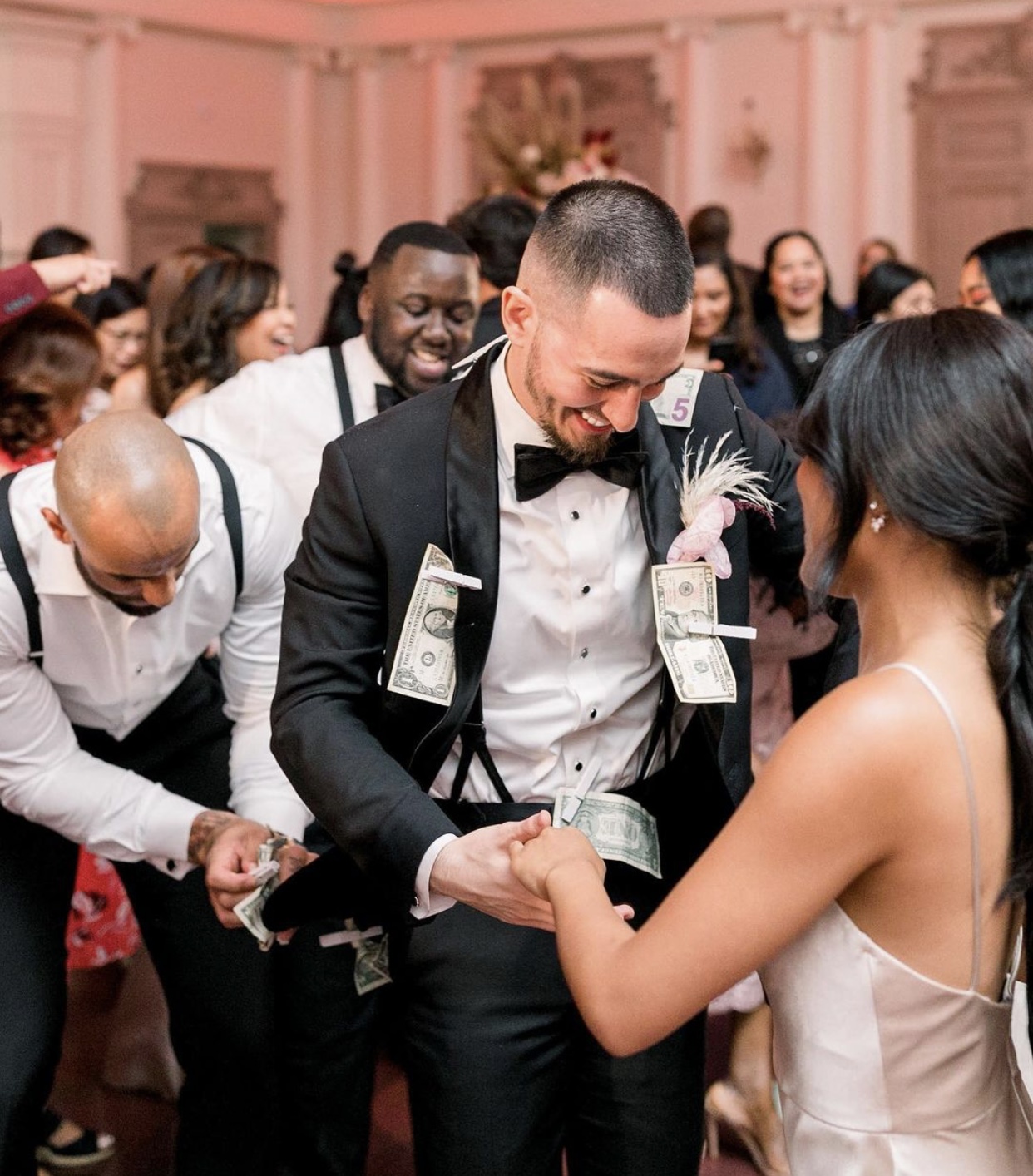
Male guests line up in front of the bride to pin money on her dress. The women pin money on the groom. The pinning can get creative with bills pinned together as garlands, made into crowns, or streaming down their clothing. This “decorating” can take a while if there are a lot of dancers. Guests take turns dancing with the bride and groom.
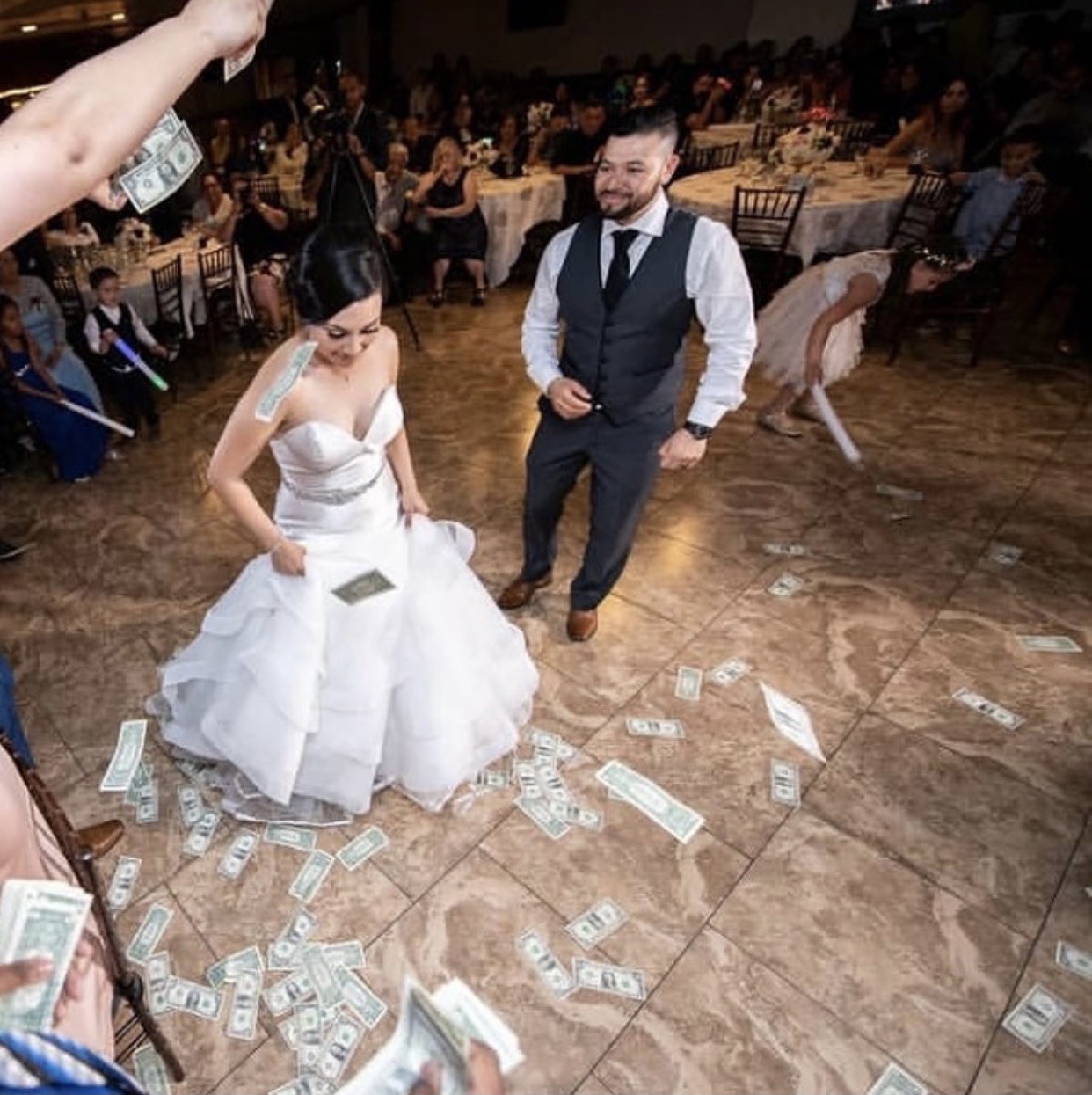
Portuguese Money Dance
Historically, the dance was for male guests to line up and dance with the bride. Today bridesmaids and female guests also dance with the groom. The father of the bride usually begins by dancing with his daughter. At the same time the mother of the groom dances with her son. The bride takes off her shoes and puts them in the middle of the dance floor. Guests then take them to pass around collecting money during the dance.
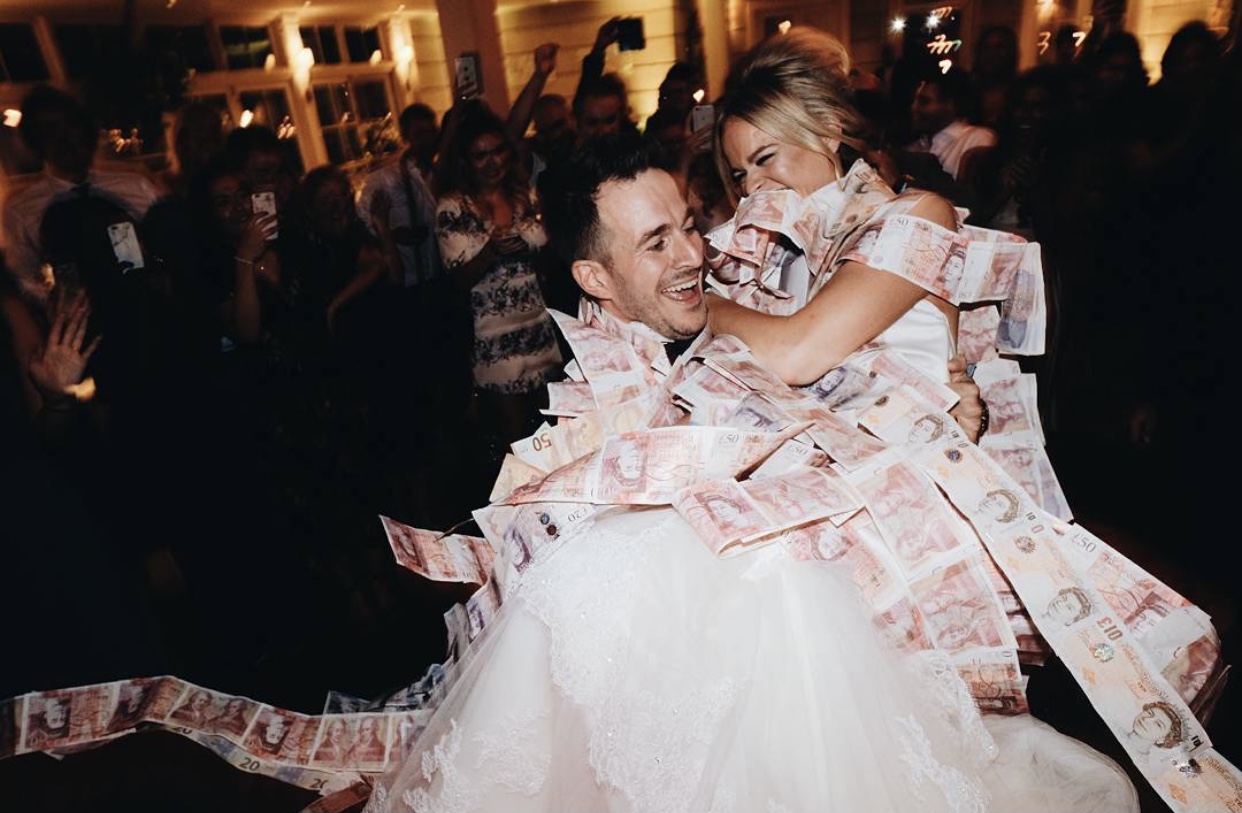
Greek Money Shower
In smaller Greek villages, there is a tradition of pinning money to the bride’s dress during a special dance. In America, this tradition is more of a money shower. When the couple dances near, the guests toss a wad of bills to help them establish their new life.
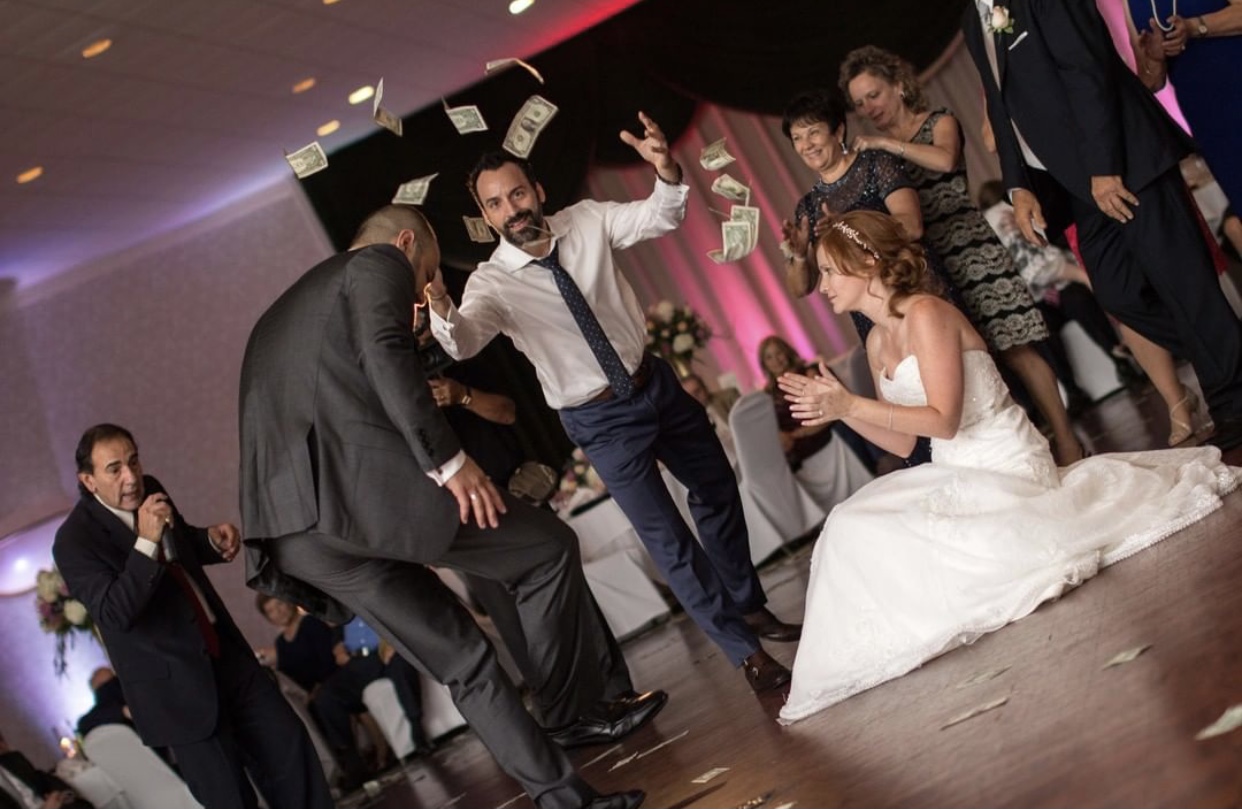
The traditional money dance with the pinning of bills is not as widespread in Greek-American communities as it once was. Predominantly we only see the Greek Money Dance as a showering of bills as the couple dances by.
Cajun Money Dance
In Louisiana, Cajuns trace their ancestry to the French Acadian exiles who were expelled by the British from Nova Scotia, Canada. Most settled in rural Southern Louisiana. Their descendants, called Cajuns, still live in Louisiana and a Cajun wedding usually includes the money dance. Traditionally guests pinned money on the bride’s veil to dance with her. Today the groom is also pinned for a dance to lively Cajun music.
Modern Money Dance Ideas
As revered as the tradition of the money dance is, you may want to freshen it up. Our experts have some ideas for you:
- Borrow from the Polish tradition. After the guest dances with you, the bartender can offer a small shot of premium alcohol like Crowne Royale.
- Is pinning the money onto clothing is your custom? Consider changing into a second outfit to avoid ruining your gown or tux.
- After playing the traditional song, be creative. One DJ created a song mix with the word “money” in the hook. But keep it tasteful.
- The Portuguese tradition is to pass the bride’s shoes around the room for contributions. Consider a second pair of less expensive shoes for the money collection.
- Couples may prefer to celebrate this tradition by merely dancing together. During this dance their loved ones throw money at them in celebration of their new life together.
- If you don’t want money as part of your dance, substitute little love notes written by each guest. They can toss them at you when you dance by their table. Have them collected and take home for when you need inspiration and a little love.