How to Write Wedding Vows That Sound Like You
How to Write Personal Wedding Vows That Don’t Sound Like Everyone Else’s
To write personal wedding vows, start with your shared history, pull specific memories rather than generic promises, keep a natural speaking rhythm, and read them aloud before the big day. Aim for 300–500 words (roughly 2–3 minutes), and lead with a story instead of a definition of love. Specificity, not eloquence, is what makes vows memorable.
Every couple wants their vows to feel personal. Yet so many end up sounding like a Pinterest template — “I promise to love you through thick and thin,” “you complete me,” “here’s to forever.” These lines aren’t wrong, but they could belong to any couple standing at any altar. If you want your vows to sound like you, the fix isn’t more poetic language. It’s more specificity.
This guide breaks down how to structure your vows, the most common mistakes couples make, how long they should actually be, and what separates a vow that gets a laugh and a tear from one that gets polite applause and nothing else. Whether you’re planning an intimate backyard ceremony or a full celebration with a Nashville skyline backdrop, the same principles apply — your vows should sound like the way you actually talk to each other.
Courthouse Wedding in Tennessee: Everything You Need to Know
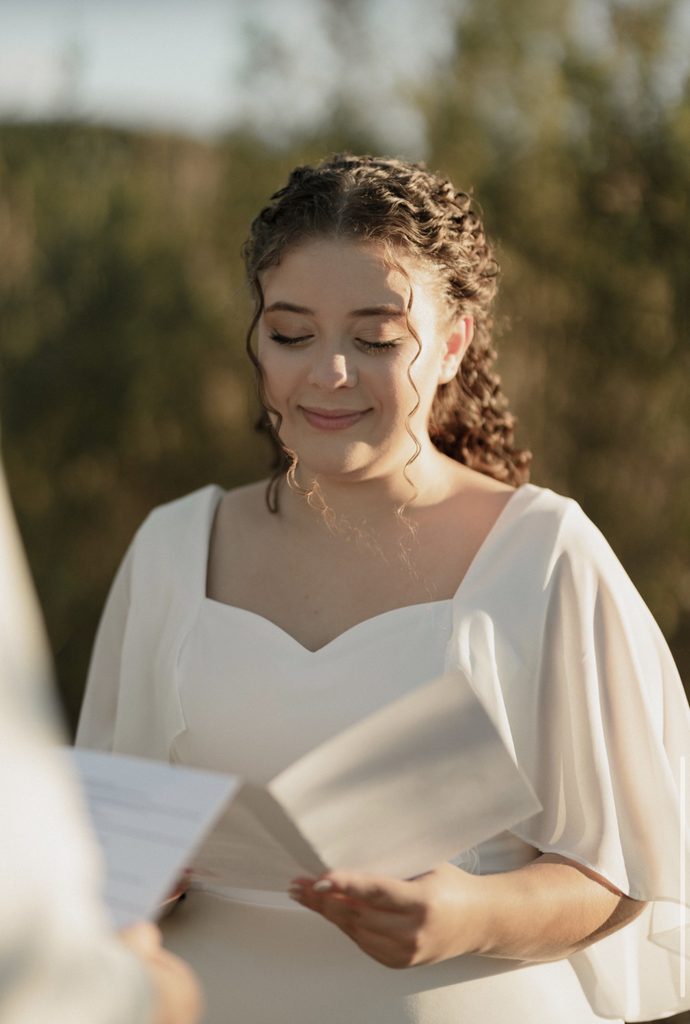
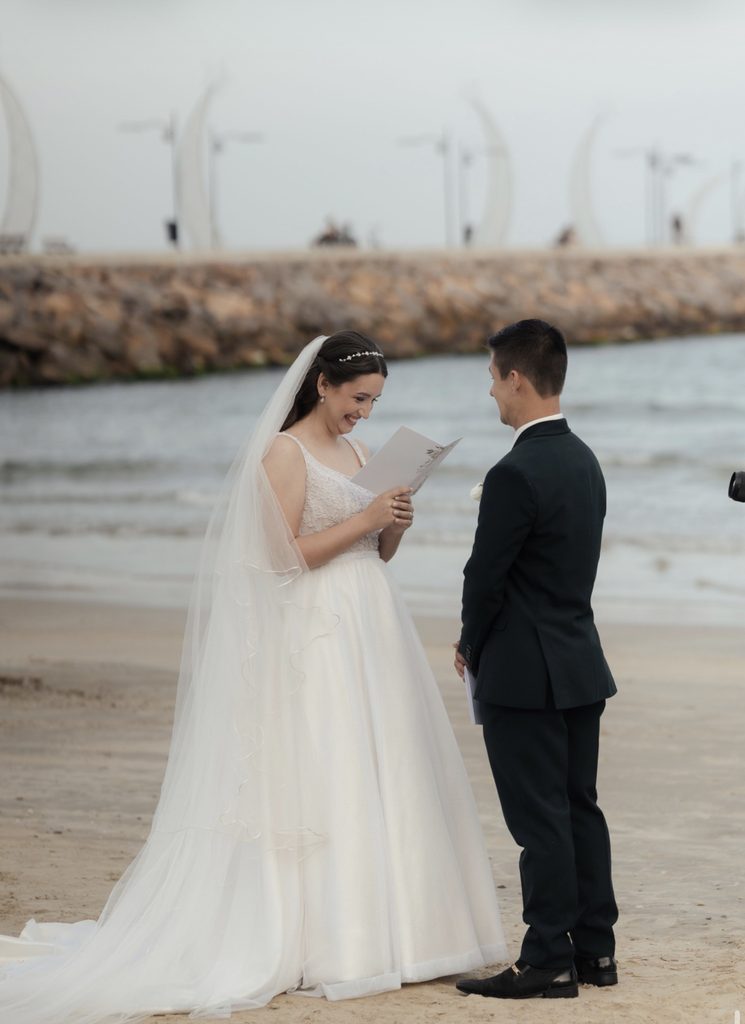
What should the structure of wedding vows look like?
Most memorable vows follow a loose four-part structure, even if the couple never planned it that way:
- An opening moment or memory. Ground the vows in something real — the first date, a specific fight you got through, the moment you knew.
- What your partner has taught you or changed in you. This is where specificity does the heavy lifting.
- The promises themselves. Concrete, not abstract. “I promise to always let you have the last bite” lands harder than “I promise to cherish you.”
- A closing line that looks forward. Something short and confident — this is where you can allow a little more polish.
- An opening moment or memory. Ground the vows in something real — the first date, a specific fight you got through, the moment you knew.
- What your partner has taught you or changed in you. This is where specificity does the heavy lifting.
- The promises themselves. Concrete, not abstract. “I promise to always let you have the last bite” lands harder than “I promise to cherish you.”
- A closing line that looks forward. Something short and confident — this is where you can allow a little more polish.
You don’t need to follow this order exactly, but having a shape in mind keeps your vows from drifting into a list of adjectives about how wonderful your partner is.
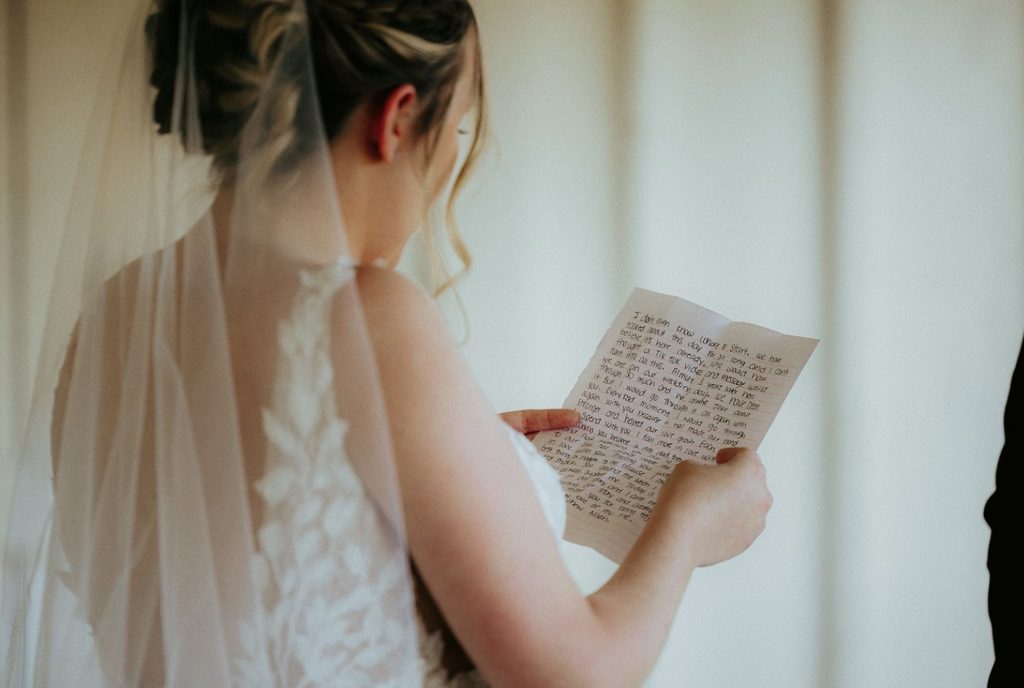


How long should wedding vows be?
Most officiants and planners recommend 300 to 500 words, or about two to three minutes when read at a natural pace. Long enough to say something real, short enough that your partner — and your guests — stay with you emotionally. If you’re nervous about timing, read your draft aloud and time it. Vows that run past four minutes tend to lose the room, no matter how good the writing is.
How to Choose a Wedding Officiant in Nashville

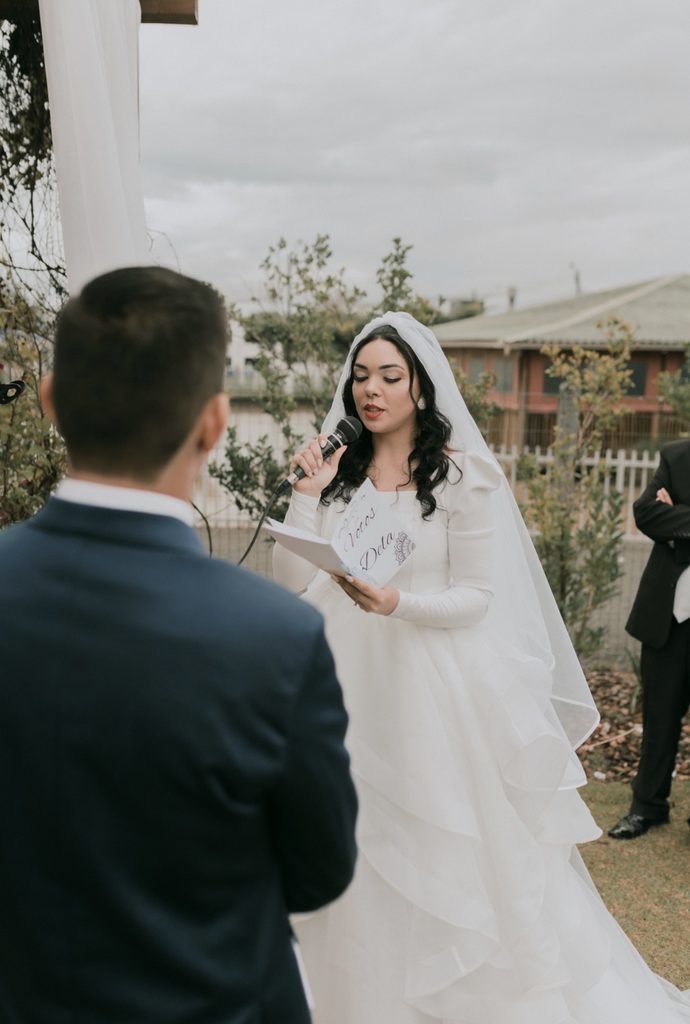
What are the most common mistakes people make when writing vows?
Starting with a definition of love
Countless vows open with “Love is patient, love is kind” or a personal riff on what love means. It’s a natural instinct, but it delays the moment guests actually connect with — hearing about your relationship specifically. Skip the definition and go straight to the memory.
Being too vague to sound sincere
“You make me a better person” is a true sentence for a lot of couples, and that’s exactly the problem — it could be said by anyone, about anyone. Instead, name the specific way your partner has changed you: “Since I met you, I’ve learned to say sorry first” is a small, concrete claim that says something no template could.
Writing for the room instead of your partner
Vows are a love letter, not a speech. If you catch yourself writing lines that seem aimed at getting a reaction from guests rather than saying something true to your partner, cut them. The best vows often make guests feel like they’re overhearing something private — that’s what makes people cry.
Overusing humor or avoiding emotion entirely
A little humor makes vows feel like you. All humor, and no vulnerability, can feel like a way of avoiding the moment. If you’re the joking one in the relationship, it’s fine to open light — but let at least one line be unguarded.
Copying vow templates word-for-word
Templates are useful for structure, not content. If a line could be swapped into someone else’s ceremony without editing, it’s worth rewriting.

What makes wedding vows actually land?
The vows people remember years later almost always share three traits:
Be specific, small details. Not “you’re always there for me,” but “you drove two hours in a snowstorm because I said I had a bad feeling.” Specificity is what makes a vow feel earned rather than borrowed.
A confident, simple close. The best endings are short. “I choose you. Today, and every day after” does more work than four flowery sentences.
The voice that sounds like the person saying it. If you’re not a naturally poetic speaker, don’t force metaphors. Plainspoken and true beats polished and generic every time.
Here’s an example of the kind of shift that makes a real difference. A generic version might read:
“You are my best friend and my soulmate. I promise to always be there for you and love you unconditionally.”
A more specific version of the same sentiment might read:
“You’ve seen every version of me — the one who cried over a parking ticket and the one who held it together at my dad’s funeral. I promise to keep showing you all of them.”
Same underlying feeling. One sounds like a card from the grocery store; the other sounds like a real relationship.


How do you actually start writing your vows?
If you’re staring at a blank page, skip trying to write the perfect opening line first. Instead:
- Write down five memories that feel important to your relationship, even if they seem small.
- Ask yourself what your partner taught you that you didn’t expect to learn.
- List the promises you actually want to make — not the ones you think you’re supposed to make.
- Draft freely, then cut anything that could apply to any couple.
- Read it aloud to check the rhythm and timing, ideally to someone who knows you both.
Writing vows is easier when you treat it less like a writing assignment and more like explaining your relationship to a close friend who’s never seen you together.
Say it like you mean it
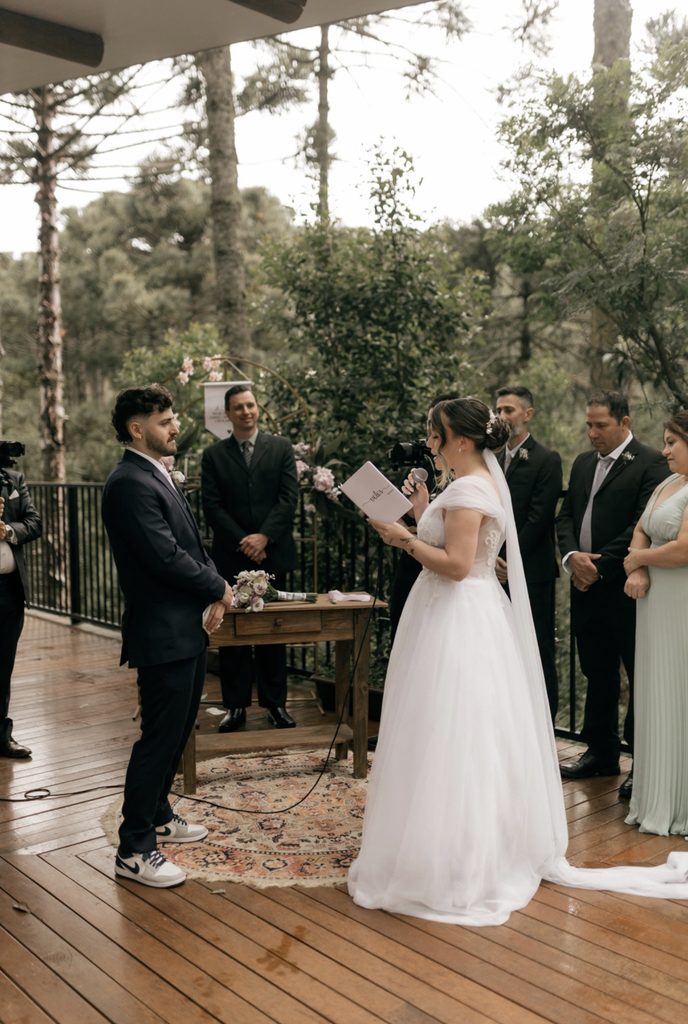
Great wedding vows don’t need to be literary. They need to be true, specific, and said in your own voice — which is often the hardest part to get right when you’re staring at a blank page a few weeks before the wedding. If you’re deep in the planning process and want vows (and a ceremony) that actually reflect your story rather than a template, that’s exactly the kind of personal touch a bespoke wedding planning approach is built around. A little structure now means you’ll be a lot more present in the moment later — which, in the end, is the whole point of the day.

Frequently asked questions
How long should wedding vows be? Aim for 300–500 words, or about two to three minutes when read aloud. This gives enough room for a real story and a genuine promise without losing your guests’ attention.
Should we write our vows together or separately? Most couples write separately and keep their vows a surprise until the ceremony, which tends to create a more emotional moment. Some couples prefer to agree on themes or length beforehand so the vows feel balanced — that’s a personal choice, not a rule.
What if I’m not a natural writer? Focus on specific memories and plain language rather than trying to sound poetic. A simple, true sentence will always outperform a forced metaphor.
Is it okay to use humor in wedding vows? Yes, especially if humor is part of how you naturally communicate as a couple. Balance it with at least one sincere, unguarded moment so the vows don’t feel like a comedy set.
Should we memorize our vows or read them? Reading from a card is completely standard and expected — officiants and planners see it constantly. What matters is the content, not whether you have it memorized.